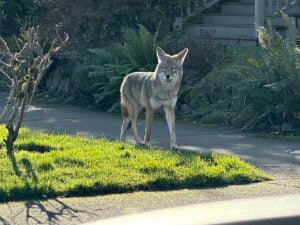
In 2026, encounters with wildlife are becoming increasingly common in many parts of the United States. On a quiet evening, you might see a raccoon rummaging through trash, a deer resting near a backyard wall, or even a coyote walking down a neighborhood street—sights that are becoming more frequent.
Today, seeing a coyote on your street is no longer surprising. They are becoming part of daily life.
Across the country, human–wildlife encounters are increasing, transforming suburbs and cities into shared spaces where animals and people overlap more than ever before.
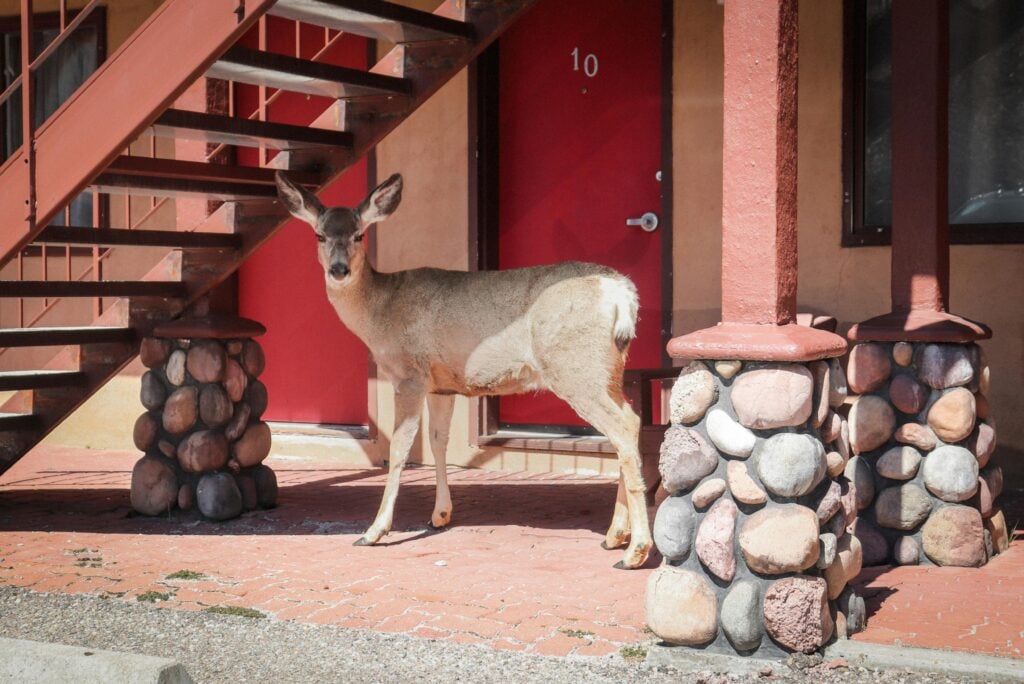
Photo by Claudia Solano via Pexels
https://www.pexels.com/photo/urban-deer-encounter-in-suburban-setting-32436088/
https://www.pexels.com/license/
One of the biggest factors is climate stress—especially drought. A recent study published in Science Advances found that human–wildlife conflict increases significantly during periods of reduced rainfall. In addition, wildlife experts say this shift isn’t random—it’s the result of environmental pressure, urban expansion, and animals adapting quickly to human environments.
At the national level, wildlife agencies have long warned about the growing challenge of human–wildlife conflict. The Association of Fish & Wildlife Agencies notes that human–wildlife conflicts are an increasing challenge affecting both people and wildlife. This will call for coordinated management methods to address the increasing number of interactions occurring between animals and people. These encounters range from minor nuisances to property damage and potential safety risks.
But the greater issue of why neighborhoods appear to be “wilder” in 2026 will be the underlying factors that bring wildlife into close proximity with humans.
Environmental pressure is pushing animals closer.
Climate stress continues to play a major role, particularly during prolonged drought conditions. A recent study published in Science Advances found that human–wildlife conflict increases significantly during periods of reduced rainfall.
Kendall Calhoun, a lead author of the study, said that “climate change will increase human-wildlife interactions,” and added that as droughts and wildfires intensify, people will need to plan ways to coexist with wildlife.
As water becomes scarce, animals expand their range and move into populated areas in search of food and hydration.
This is especially evident in highly adaptable species like coyotes and raccoons, which can navigate both wild and urban environments.
During dry periods, human neighborhoods often provide consistent water sources, food waste, and shelter—making them surprisingly attractive to wildlife.
Cities are expanding into wildlife habitats.
At the same time, human development continues to push deeper into natural habitats. As suburbs expand and green spaces shrink, the boundary between “human” and “wild” becomes increasingly blurred.
“Colorado’s urban expansion is increasing the wildland-urban interface and leading to more human-wildlife encounters,” according to reporting from Axios.
This overlap creates a new reality: neighborhoods are no longer separate from ecosystems—they are part of them.
Research highlighted by Faunalytics shows that urbanization brings wildlife into closer contact with humans and shapes how they interact. As habitat loss occurs, there will be an increase in the amount of wildlife that will rely on human environments for their survival. They do so by utilizing the readily available and abundant food sources in the form of garbage, pet food, and landscaping.
In many cases, the result isn’t conflict in the traditional sense, but coexistence under pressure. Animals are not necessarily becoming more aggressive; they are becoming more present.
Wildlife is adapting faster than expected.
Beyond environmental and human-driven factors, there’s another key reason encounters are rising: animals are learning.
Recent reporting and studies show that some urban wildlife species are becoming more comfortable around humans. For example, coyotes are now often seen moving around cities without much difficulty and have become less wary of humans. They have also adapted their behavior to fit in with the urban way of life.
“Urban coyotes nationwide take more risks compared to those coyotes in rural areas,” said Javier Monzón, highlighting how wildlife is becoming more comfortable in human environments.
This adaptation is a strategy to survive. Animals that can handle noise, light, and being around people will generally do much better in contemporary environments. Over time, this leads to more frequent sightings—not because wildlife populations are exploding, but because they are becoming more visible.
In other words, animals aren’t just being pushed into neighborhoods—they’re learning how to live there.
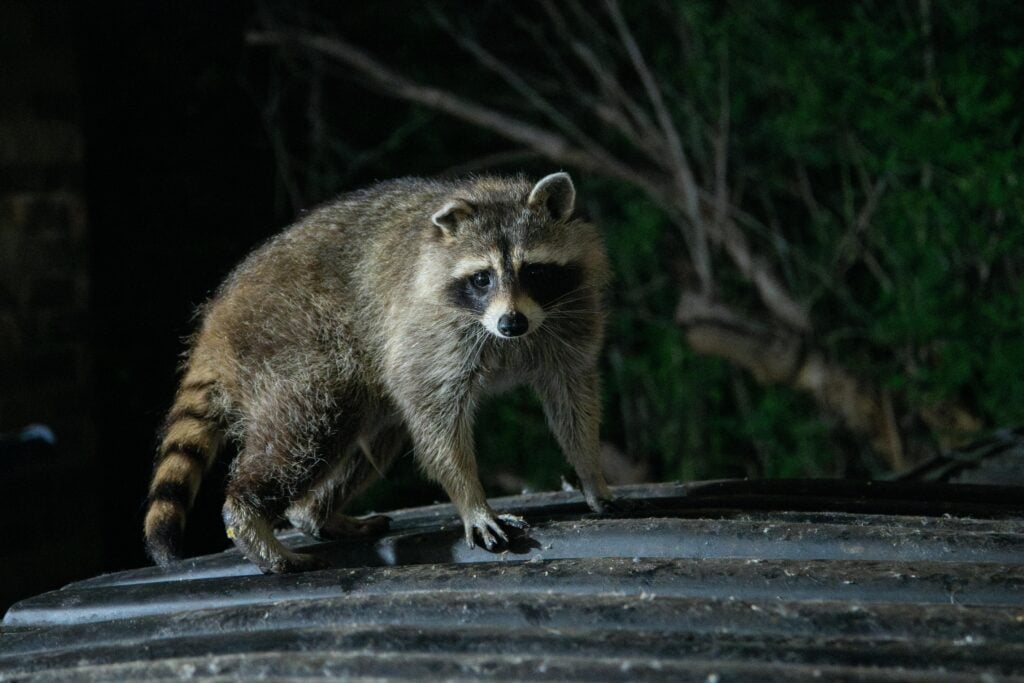
Photo by Andrew Patrick Photo via Pexels
Source: https://www.pexels.com/photo/curious-raccoon-exploring-at-night-in-nature-32442927/
License: https://www.pexels.com/license/
Real-world examples show the trend is accelerating.
The rise in encounters is not just theoretical. In Boulder, Colorado, a wildlife rehabilitation center reported record numbers of animal intakes, a sign that human–wildlife interactions are increasing in real, measurable ways.
These kinds of spikes reflect a broader national pattern. Urban expansion, along with changing environmental conditions, has resulted in a noticeable increase in wildlife sightings (in the places where they were once scarce). What may seem like a sudden surge is actually the result of gradual changes reaching a tipping point.
What it means for communities
Seeing wildlife—or hearing animals at night—can be both fascinating and unsettling for nearby residents. While seeing a deer as the sun sets or hearing the sound of coyotes at night can remind you of how close you live to nature, they can also give you pause about safety, the potential damage they might do to your property, and the idea of co-existing with them.
Wildlife experts say that most encounters with wildlife are harmless, but the need for each individual to be aware of how to prevent animals from encountering them has become increasingly important. Leaving attractants such as unsecured garbage or standing water will lead to more frequent visits to your property. As a result, once animals are drawn to a location, they are more likely to return.
The increasing frequency of human-animal interactions suggests that human behavior is having a larger impact on the environment.
One researcher noted that animal presence is often a result of their preferred habitat being depleted of resources due to human intrusion.
The presence of animals in urban areas is likely to continue beyond 2026. The number of encounters between humans and wildlife will only increase as cities and their populations grow. As resources dwindle and species continue to adapt their behaviors, encounters will continue. Moving forward, the challenge will not be eliminating encounters but learning how to responsibly manage all types of animal/human interactions.
In 2026, the question is no longer why wildlife is showing up in human spaces. The question is how humans will respond to sharing those spaces.
Sources:
Association of Fish & Wildlife Agencies — “Human Wildlife Conflicts”
Science Advances — “Human-wildlife conflict is amplified during periods of drought”
Faunalytics — “Friend or Foe? Human Tolerance For Wild Animals In Urban Spaces”
Axios Boulder — “Greenwood Wildlife sets new record for animal care”
UCLA Newsroom — “How climate change brings wildlife to the yard”
The Guardian — “Wily coyote? Urban canines take more risks compared with rural ones; study finds”
Editor’s Disclaimer:
This article is intended for informational purposes and reflects current research and reporting on human–wildlife interactions. While encounters with wildlife are increasing in some areas, most animals are not aggressive and typically avoid human contact. Readers are encouraged to follow local wildlife guidelines and consult regional authorities for safety information.
