
This week is the anniversary of the film, Pet Sematary, marking 37 years since its 1989 release. The film, directed by Mary Lambert and based on the novel by Stephen King, has remained a defining work in horror cinema. Pet Sematary is still well remembered by the horror community over thirty years later. The film’s legacy has continued through its sequel (Pet Sematary II) and a later remake. Along with these, it has a large following of devoted fans who attend conventions. Why has Pet Sematary been able to continue to thrive in the horror community, while other horror films have faded from memory?
The answer lies not in what the film shows, but in what it understands.
Horror Rooted in Grief
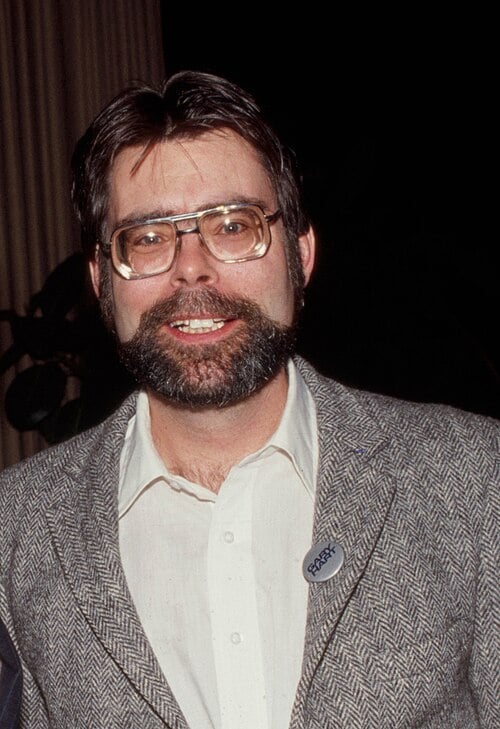
https://commons.wikimedia.org/wiki/File:Stephen_King,_1984_presidential_campaign_of_Gary_Hart.jpg
Pet Sematary is a Stephen King novel that came out during a time when slasher and spectacle-driven films were dominating the horror film space. Many of these films were (and still are) great pieces of entertainment, but lacked the emotional depth that previous horror films had provided. In contrast, Pet Sematary grounded its horror in something much more universal than slasher films. It was a story rooted in grief. By doing this, Pet Sematary not only provided an audience with the fear of the unknown (which is a key element to the horror genre), but it forced the audience to realize something they were very familiar with. That was the pain of losing someone you love and all the terrible and dangerous things you could do to try to fix (go back in time) that loss.
A Simple Story, Powerful Consequences
In this film, we follow Louis Creed, a doctor who has moved his family to rural Maine. There, he discovers a mysterious burial ground capable of resurrecting the dead. After experiencing a tragedy, Louis is forced to make an impossible choice and learns that there are boundaries that should never be crossed. While the premise of the film is clean and simple, it is the emotional impact of that premise that is truly powerful.
The Emotional Weight of Loss
Pet Sematary’s emotional exploration of death and grief is what separates it from other horror films. Death is displayed in this film as something that happens every day – it is not an abstraction. Through Louis’s actions, we are forced as an audience to think about how much we would go through in order to undo a loss. We see the consequences of his actions clearly before we ask ourselves the same question. This emotional core gives the film a lasting impact that extends beyond the scope of horror films. The film’s primary goal is not to elicit fear from the audience. The horror is experienced by an audience member at a personal level rather than an abstract level. This is because there is an emotional connection to the characters.
Horror That Feels Personal
This emotional core is also what makes the film particularly difficult to watch at times. Unlike many horror films that allow viewers a degree of separation, Pet Sematary removes that comfort. It asks unsettling questions: What would you do if you had the same choice? Would you truly be able to accept loss, or would you risk everything for another chance? By grounding its horror in decisions rather than just events, the film creates a lingering psychological effect. This stays with viewers long after it ends.

Atmosphere Over Shock
The atmosphere of a film is as important as its storytelling. Instead of using a lot of jump scares, Pet Sematary builds suspense through its mood, pacing, and an ongoing sense of dread. The filmmakers know how to create fear that lingers beneath the surface instead of relying solely on the surprise of a jump scare. As your experience with the film continues, expect to see scenes go from being very calm to becoming very uncomfortable at any moment. This reflects how quickly normal life can turn unsettling. This technique keeps audiences engaged. It will also help to reinforce the main ideas of the story.
The Power of Setting
The environment has an enormous effect on the atmosphere of the story, with the silent farmlands of Ludlow, Maine, providing a sense of solitude that heightens the tension within the narrative. The large open spaces and darkened areas provide a sense that there is something just beyond our vision. Therefore, the film’s setting contributes to the realism of the film and also adds to the unease felt by the viewer. Effective horror is often built on what is suggested rather than shown, using the environment to create unease.
The Role of the Supernatural
The supernatural elements deepen the fear and give the story greater weight. Even familiar horror tropes feel effective because they’re grounded in emotional stakes. They help the story feel consistent and believable.
How It Compares to Modern Horror
When contrasted with some contemporary horror styles, the strengths of Pet Sematary become more apparent. Some modern horror films emphasize relentless tension and frequent visual shocks throughout the movie. In some cases, this can come at the expense of atmosphere, favoring visual shocks over sustained suspense. This technique can be effective for some, but when compared to years gone by, it often creates less emotional attachment. Pet Sematary relies on the contrast between the everyday world and the horrific world that emerges. That balance is why it still connects with audiences today.
A Timeless Approach to Storytelling
The storytelling in the movie has a quality that transcends time. In the same way that young people have rediscovered old forms of media such as vinyl records because of their authenticity, many people are now appreciating classic horror movies for their slower, more deliberate style. In Pet Sematary, the film slows down its scares to earn them. This allows for an experience that is simultaneously intimate and disturbing.
A Message That Never Fades
As Jud Crandall, played by Fred Gwynne, warns: “Sometimes dead is better.”
This quote has survived on its own merit. It sums up the entire film in a simple yet haunting way — just like Pet Sematary does.
Sources:
Pet Sematary by Stephen King. New York: Doubleday, 1983.
Pet Sematary. Directed by Mary Lambert. Written by Stephen King. Paramount Pictures, 1989.
Editor’s Disclaimer: This article is intended for educational and informational purposes only. The content is based on publicly available sources and reflects a summary and interpretation of those materials. While every effort has been made to ensure accuracy, the information presented may not be comprehensive or up to date. Readers are encouraged to consult original sources and additional references for further research.
