
WrestleMania has been around for more than 40 years and is considered the most significant event in WWE. As ESPN notes, “The lights shine a little brighter on WrestleMania weekend.” WrestleMania blends athleticism and entertainment on a spectacular scale. The event began in 1985 as a gamble and is now a global phenomenon. As WrestleMania grew, WWE created the Hall of Fame to honor its history-makers.
Together, WrestleMania and the Hall of Fame tell the story of the event’s evolution.
The Birth of a Spectacle
When WWE (then known as WWF) launched WrestleMania at Madison Square Garden in 1985, its success was uncertain. With stars like Hulk Hogan and celebrity involvement, the event introduced an unprecedented crossover between sports and entertainment.
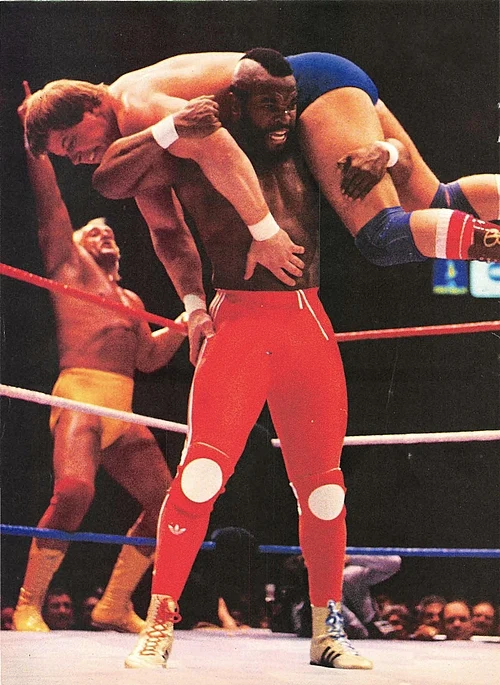
Image via Wikimedia Commons.
https://commons.wikimedia.org/wiki/File:Mr_T_at_WrestleMania,_1985.jpg
Public Domain
https://commons.wikimedia.org/wiki/Commons:Public_domain
The event proved to be a successful gamble that established the model for an annual spectacle.
Early WrestleMania events were modest compared to today’s standards, but they helped introduce a key idea: wrestling could be more than a niche attraction—it could become mainstream entertainment. ESPN’s historical coverage notes that these early shows laid the groundwork for larger venues, bigger audiences, and more elaborate production.
The seeds of legacy were planted here, marking the beginning of WrestleMania history and evolution, even if the WWE Hall of Fame had not yet become a central feature of the brand.
Expansion and the Rise of Icons
WrestleMania became a worldwide phenomenon during the late 1990s and early 2000s. Personalities like Stone Cold Steve Austin and The Rock helped define this era, creating memorable matches and rivalries that gave WrestleMania an identity comparable to the Super Bowl of professional wrestling.
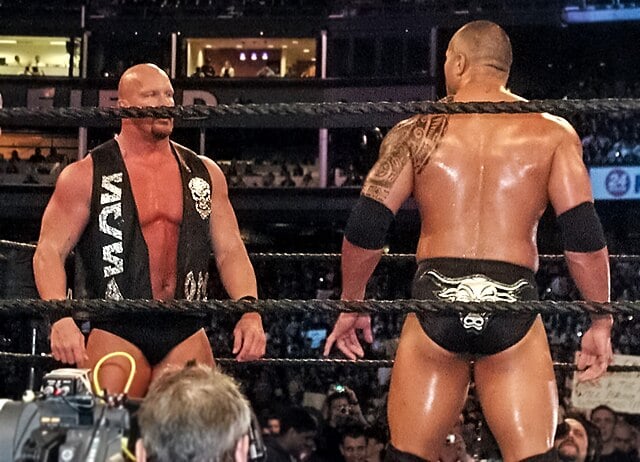
https://commons.wikimedia.org/wiki/File:Rockaustinxix_b.jpg
Public Domain (released by the copyright holder)
https://commons.wikimedia.org/wiki/Commons:Public_domain
Over time, WrestleMania grew into a cultural phenomenon rather than just another wrestling event. Attendance increased, production values improved, and the event gained an international audience, according to ESPN and Sports Illustrated. As Sports Illustrated reports, WrestleMania 38 drew a combined attendance of 156,352 across two nights, demonstrating how that growth has continued into the modern era.
It is from this era that many Hall of Fame inductees emerged. The Hall of Fame was established and later reintroduced in the 2000s to recognize individuals who contributed significantly to professional wrestling and to strengthen its connection to WrestleMania. As a result, the Hall of Fame’s induction ceremony evolved into an important part of WrestleMania weekend.
The Modern Era: A Global Entertainment Powerhouse
WrestleMania is no longer just a wrestling event—it is a multi-day global entertainment experience.
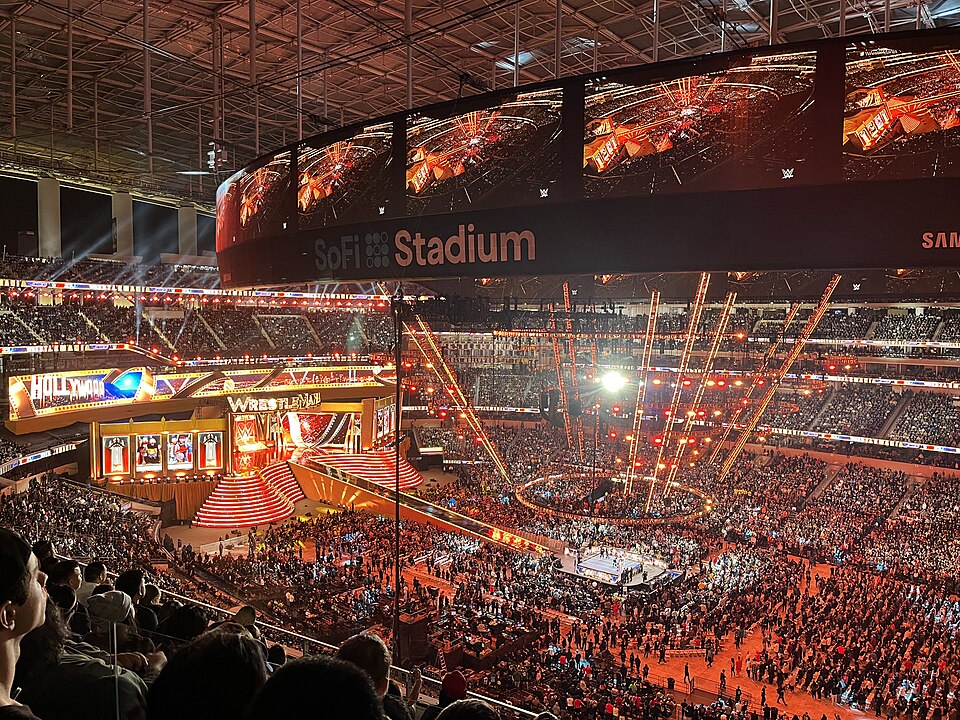
Photo by Troutfarm27, via Wikimedia Commons.
https://commons.wikimedia.org/wiki/File:WrestleMania_39_Saturday_@_SoFi_Stadium.jpg
Creative Commons Attribution-ShareAlike 4.0 International (CC BY-SA 4.0)
https://creativecommons.org/licenses/by-sa/4.0/
Today’s WrestleMania continues to expand in scope. Recent ESPN coverage of WrestleMania 42 highlights the scale of the modern show, from massive stadium productions to worldwide streaming audiences.
Today’s event typically features advanced staging, increased celebrity participation, and expanded cross-promotional opportunities beyond the ring. Wrestlers such as John Cena have expanded beyond wrestling into mainstream entertainment, further increasing WrestleMania’s cultural relevance.
At the same time, the Hall of Fame has grown in prominence. As WWE states, “The 2026 WWE Hall of Fame Ceremony will deliver an unforgettable experience for the WWE Universe,” highlighting how the ceremony has become a major attraction during WrestleMania weekend. WrestleMania weekend provides an opportunity to celebrate and honor not only wrestlers but also other individuals who have been a part of, and shaped, the wrestling industry, including managers, commentators, and other contributors.
These moments transform the Hall of Fame from a recognition ceremony into an emotional cornerstone of WrestleMania weekend.
The Hall of Fame: Honor and Debate
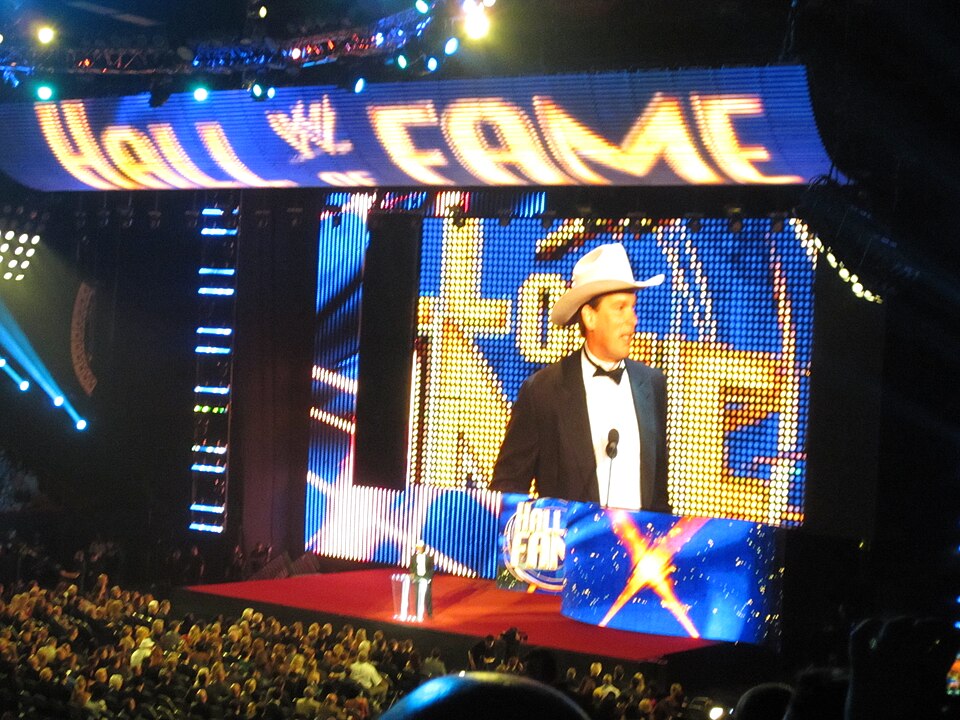
Photo via Matt Brink.
https://commons.wikimedia.org/wiki/File:JBL_at_WWE_Hall_of_Fame_(7069734095).jpg
Creative Commons Attribution-ShareAlike 2.0 (CC BY-SA 2.0)
https://creativecommons.org/licenses/by-sa/2.0/
Though criticized for business motives, the Hall of Fame remains vital to wrestling history. The ceremony allows for a unique opportunity to hear about each performer’s career, their accomplishments, and their challenges first-hand.
This dynamic relationship between past and present is what makes the pairing so compelling. WrestleMania generates the moments; the Hall of Fame preserves them.
Legacy Through Evolution
Over the years, WrestleMania’s evolution has reflected tremendous growth, both as an event and in how it is perceived. From a marketing experiment to one of the biggest events on the sports calendar, WrestleMania has reshaped how audiences view professional wrestling.
Each era has contributed something unique:
The 1980s created the spectacle. The 1990s and 2000s introduced iconic personalities, while the current era has expanded its global audience.
During this time, the Hall of Fame has continued to evolve, ensuring that contributions from past generations are preserved.
Why It Still Matters Today
WrestleMania’s large audience and global exposure reflect its continued popularity. According to reports cited in Forbes, WrestleMania 39 generated roughly $215 million in economic impact for Los Angeles. These figures highlight sustained interest and the enduring appeal of the event.
It allows fans to celebrate their community and share their memories of the event. The Hall of Fame acts as a bridge between past and present, connecting each in-ring moment to the figures who shaped the industry.
Together, they create a continuous cycle of history and legacy.
WrestleMania makes history; the Hall of Fame preserves it; new generations are inspired to create more.
Conclusion
WrestleMania has evolved from an innovative experiment into a worldwide success. The Hall of Fame has become an essential institution for preserving WrestleMania’s legacy through its unforgettable moments and personalities.
The Hall of Fame plays a key role in WrestleMania’s evolution by providing context for the spectacle. Together, they play an important role in preserving professional wrestling history.
Sources:
ESPN — “WrestleMania 42: Key stats and notes for all 13 matches across both nights”
Forbes Mark LaSota — “WrestleMania 41: A Profitable History for Wrestling’s Biggest Event”
ESPN Keith Jenkins — “WrestleMania history: All-time matches, locations, WWE stats”
Sports Illustrated — “WWE WrestleMania: Records, History, Locations, Dates, Top Stories, & More”
ESPN Sean Coyle and Alex Mellion — “Meet the 2026 WWE Hall of Fame Class”
Bleacher Report — “WWE WrestleMania 42’s Latest Match Card and Known Order for Historic Event”
Encyclopaedia Britannica — “WrestleMania”
Editor’s Disclaimer: This article is intended for educational and informational purposes only. It is based on a combination of historical sources, media reports, and publicly available information regarding WrestleMania and the WWE Hall of Fame. While every effort has been made to ensure accuracy, some interpretations and analyses reflect the author’s perspective.
The views expressed in this article do not necessarily represent those of WWE or any affiliated organizations. All trademarks, names, and likenesses referenced remain the property of their respective owners.
Readers are encouraged to consult original sources, including publications such as ESPN and Forbes, for additional context and verification.
