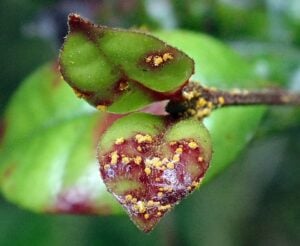
In parts of Melbourne, some native trees are still standing, still growing—but no longer reproducing.
Some commentators have informally compared the phenomenon to ‘zombie trees’—plants that appear alive yet are functionally compromised. While not a scientific term, it reflects growing concern about a rapidly spreading fungal infection known as myrtle rust.
It was first reported in Australia in 2010 and soon became widespread across much of Australia, infecting a wide range of species within the Myrtaceae family. More recently, concern has grown about its impact in Victoria, particularly in the Melbourne area.
A disease attacking one of Australia’s most important plant families
Myrtle rust is caused by the exotic fungus Austropuccinia psidii, which infects plants in the Myrtaceae family. This group includes some of Australia’s most ecologically significant species, such as eucalyptus, tea tree, paperbark, and lilly pilly.
The pathogen strikes young tissues such as leaves, stems, flowers, and fruits, resulting in distorted growth, leaf fall, and even plant death when the infection is serious. After its introduction into Australia, the fungus spread rapidly. Within a decade, it had spread across eastern and northern regions, affecting both natural ecosystems and cultivated environments.
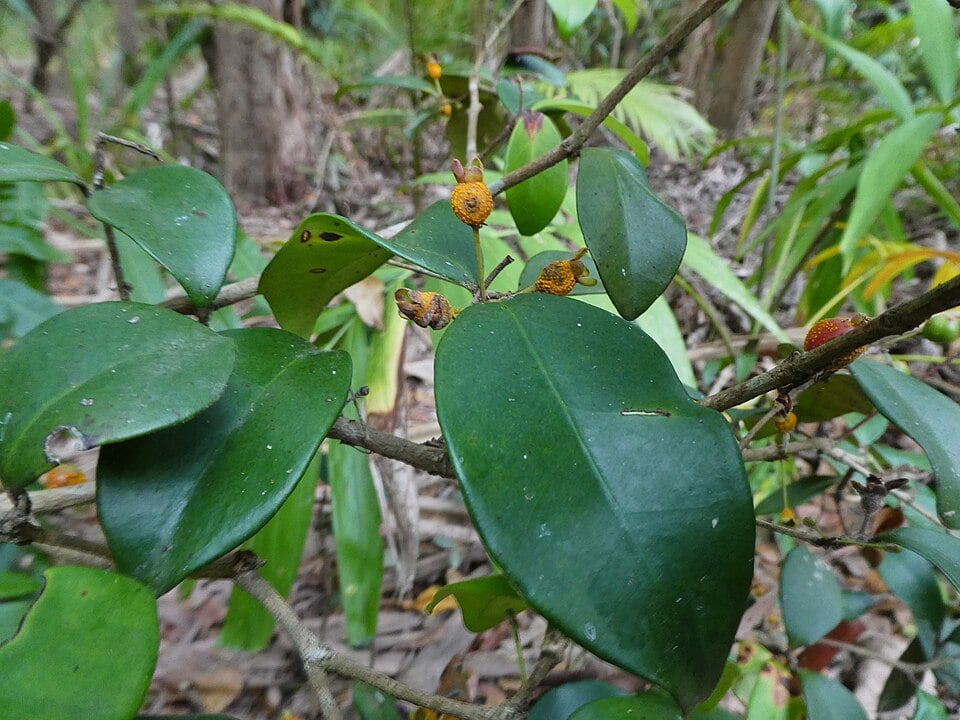
Credit:
Photo by Junglenut (Steve Fitzgerald), via Wikimedia Commons, licensed under CC BY-SA 4.0.
https://commons.wikimedia.org/wiki/File:Eugenia-reinwardtiana-SF24307-05.jpg
https://creativecommons.org/licenses/by-sa/4.0/
Researchers note that the pathogen can affect not only individual plants but entire species, some of which are now considered at increased risk of decline.
A growing presence in Victoria
For this reason, more sophisticated monitoring has been introduced in Victoria, particularly in urban areas where such programs can be implemented effectively. Nurseries, public gardens, and even plants in private settings have been identified as high-risk zones because their movement increases the chances of spreading to other locations. As Agriculture Victoria explains, “Myrtle rust can be dispersed by” movement of infected plant material, along with spread via wind, water, animals and humans.
This means even small outbreaks can escalate if not carefully managed. Nevertheless, experts warn that conditions in parts of Victoria—especially coastal and humid areas—may allow the disease to continue spreading.
Why “alive but not reproducing” matters
The idea of “zombie trees” stems from a specific ecological concern: reproduction failure.
While myrtle rust may not kill all infected plants immediately, it can prevent them from flowering or producing healthy seeds.
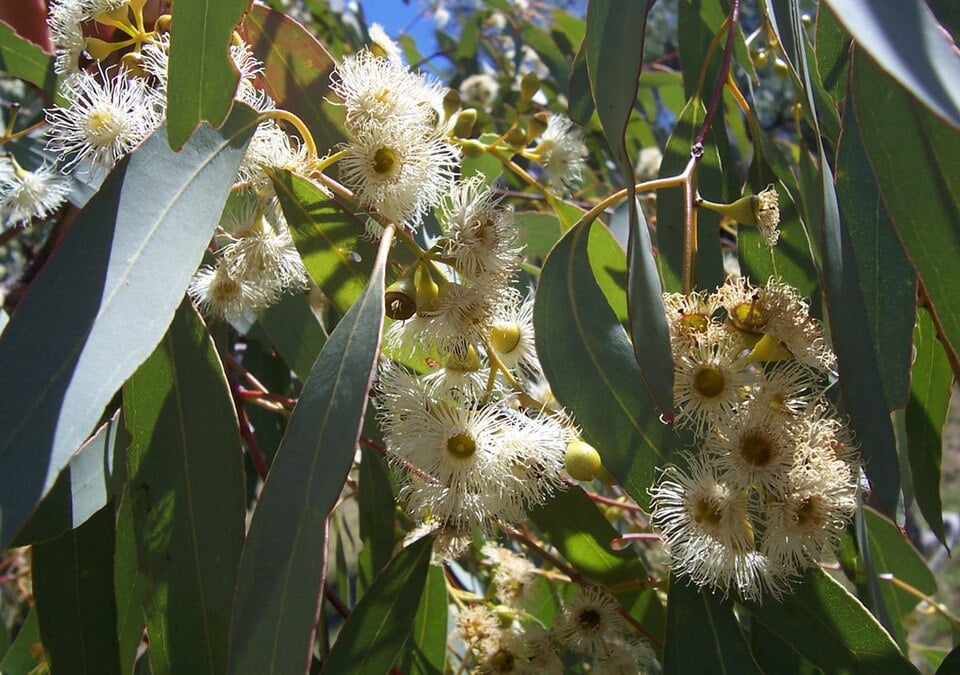
Credit:
Photo by Fir0002 / Wikimedia Commons, licensed under CC BY-SA 3.0.
https://commons.wikimedia.org/wiki/File:Eucalyptus_flowers2.jpg
License page (CC BY-SA 3.0):
http://creativecommons.org/licenses/by-sa/3.0/
As a result, plant populations may gradually decline over time. A similar sentiment has been expressed locally. The website of the City of Melbourne states that “the impact of myrtle rust on existing stock is less important than its impact on regeneration.”
In other words, the real problem may be the fact that infected plants cannot regrow in the future.
If plants do not reproduce, they become unable to replenish their own population. New seedlings will no longer replace older plants, resulting in a reduction of the total population. This loss of reproductive capacity is central to the long-term impact of myrtle rust.
Impact on the ecosystem as a whole
- This has broader implications for entire ecosystems.
- Myrtaceae plants form an important part of the Australian ecosystem. These plants provide habitat and food for many species.
- When myrtle rust affects these plants, several ecological impacts can follow:
- Less flowering leads to less nectar for pollination
- Less fruit means less food for wildlife. Vegetation depletion can alter habitat structure and reduce biodiversity.
An environmental hazard with gradual onset
Unlike hazards such as bushfires and floods, myrtle rust does not cause immediate, easily visible damage.
Instead, it drives gradual environmental change.
There will still be plants, but they might have been infected and therefore weak or sterile. Some may even succumb over time. This makes the disease particularly challenging to manage. By the time impacts become obvious, significant ecological damage may already have occurred. The impact is likely to grow if the pathogen continues to spread.
Managing a disease that cannot be eradicated
Strategies aimed at containing myrtle rust have encountered several challenges.
Since the pathogen can be easily disseminated through wind, water, animals, and human movement, eradicating it has become impractical.
The focus has shifted to control and containment strategies. This strategy is currently being implemented in Victoria by working together with government organizations, industries, and landowners to observe the disease and contain its spread.
Ongoing research is examining which species are most susceptible and how ecosystems may adapt.
What the future could hold
Myrtle rust is still an emerging issue in Victoria.
Its presence within the Melbourne area increases the risk of further spread. Yet, scientists expect wider ecological effects in the future based on the experience of other states.
The question to ask here is not merely the present situation—rather, what the future holds.
If the rust becomes endemic in native flora, the long-term ecological effects could be severe. This has led to the informal metaphor of ‘zombie trees.’
A quiet warning for Melbourne’s ecosystems
In a city like Melbourne, where urban green spaces and native vegetation play an important role in environmental health, the presence of myrtle rust is a reminder of how vulnerable ecosystems can be to invasive diseases.
For now, many affected trees are still standing.
But the deeper question is whether future generations of those trees will still be able to grow.
And that answer may determine the long-term health of the ecosystems they support.
Sources:
Invasive Species Council — “Myrtle Rust”
Agriculture Victoria — “About myrtle rust”
City of Melbourne — “How would you unleash nature’s potential in Melbourne?”
Agriculture Victoria — “Reduce the spread of myrtle rust on your property”
Editor’s Disclaimer: This article is based on currently available scientific research, government reporting, and publicly accessible information at the time of publication. While every effort has been made to ensure accuracy, understanding of myrtle rust and its ecological impacts continues to evolve. Some descriptions—such as the term “zombie trees”—are used as informal metaphors to aid public understanding and are not scientific classifications. Readers should refer to official environmental authorities and peer-reviewed research for the most up-to-date information.
