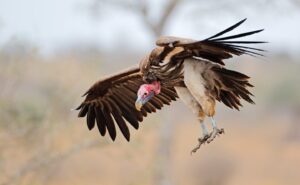
Vultures in the Mainstream
Popular culture often paints vultures as ominous and unclean. They’re commonly associated with death, decay, and disease, and many people assume they circle overhead only when searching for dead animals. But these assumptions don’t tell the full story.
If you take the time to truly understand vultures, you’ll find that many of these long-held beliefs are inaccurate.
Myths About Vultures
Myth 1: Vultures Circle Only to Find Food
While vultures do circle the air to locate carrion, that isn’t the only reason. They also ride thermals — upward-moving columns of warm air.
Because vultures expend minimal energy flapping their wings, these thermals allow them to soar, gain altitude, and travel long distances with ease.
Source: Live Science
Myth 2: Vultures Spread Disease
In reality, vultures help prevent the spread of disease. Carcasses left in the wild can quickly transmit harmful bacteria and viruses to the environment. Vultures stop this by consuming decaying bodies before pathogens spread.
Their digestive systems are incredibly acidic (pH ~1), which allows them to safely digest contaminated meat without becoming ill.
Source: World Wildlife
Myth 3: Vultures Are Symbols of Death
Although their scavenging lifestyle links them to death, vultures are part of the natural world — a world proven to enhance human well-being.
Studies show that spending time in nature and observing wildlife can improve both mental and physical health. Vultures, like all natural creatures, contribute to this restorative effect.
Source: Vulture Conservation Foundation
Nutrient Cycling: An Overlooked Benefit
Beyond disease prevention, vultures also help maintain ecosystem health through nutrient cycling.
By consuming carcasses, they absorb nutrients, later returning them to the environment through their waste — which enriches the soil and contributes to healthier ecosystems.
Source: National Wildlife Foundation.
Protecting Vultures
Given how vital vultures are — to ecosystems and even indirectly to human health — protecting them is essential.
The Vulture Conservation Foundation continues to lead conservation efforts throughout Europe. Learn more or support their work here:
? https://4vultures.org/
Sources
- https://www.livescience.com/animals/birds/why-do-vultures-circle
- https://nwlfd.org/home/f/the-vital-role-of-vultures-in-ecosystems
- https://www.worldwildlife.org/resources/facts/vultures-natures-influencers
- https://4vultures.org/blog/vultures-contribute-to-a-healthier-planet
