
History was made this week as Democrat Scott Colom defeated Republican Senator Cindy Hyde-Smith in Mississippi’s U.S. Senate race following more than a week of ballot counting. According to final county results announced by Mississippi Secretary of State Michael Watson, Colom defeated Hyde-Smith by several thousand votes.
Colom’s victory is historic because he becomes the first Black man elected to represent Mississippi in the U.S. Senate since the Reconstruction era. At the presidential level, Mississippi is still a heavily Republican state. President Donald Trump carried the state in 2024 by 23 points. This makes Colom’s victory even more unique.
Colom also became the first Democrat elected to the U.S. Senate from Mississippi since John C. Stennis won reelection in 1982. The 43-year-old attorney campaigned in a manner that appealed to both Black and white voters, an anomaly considering the state’s history.
Nationally, Colom’s victory contributed to a Democratic Senate majority of at least 55 seats, with Alaska’s remaining race still uncalled, according to Reuters. The result may reflect voter dissatisfaction with the Trump administration’s economic and foreign policies, although several factors likely contributed to the outcome.
Who is Scott Colom?
Scott Colom is a Mississippi prosecutor and Democratic U.S. senator-elect who defeated Republican incumbent Cindy Hyde-Smith in the November 2026 election. A seventh-generation Mississippian from Columbus, Colom earned degrees from Millsaps College and the University of Wisconsin Law School before serving as a justice court judge, municipal judge, and city prosecutor.

In 2015, Colom unseated a nearly 30-year incumbent to become District Attorney for Mississippi’s 16th Circuit Court District, winning reelection twice. As district attorney, he pursued restorative justice initiatives and worked with the Innocence Project on efforts to review potential wrongful convictions.
Colom entered the 2026 U.S. Senate race in September 2025, arguing that Hyde-Smith was not delivering for Mississippi families. His campaign emphasized bipartisan cooperation and direct outreach to voters across party lines. His campaign focused on lowering household costs, protecting rural hospitals, creating local jobs, and addressing the war involving Iran. Raised in a politically diverse legal family and representing a Republican-leaning district, Colom emphasized bipartisan cooperation and direct outreach to persuade voters across party lines.
Cindy Hyde-Smith and the Republican Senate Seat
A former cattle rancher and lobbyist, Cindy Hyde-Smith entered the Mississippi State Senate in 2000 as a Democrat before switching to the Republican Party in 2010.

Hyde-Smith was elected Mississippi Agriculture Commissioner in 2011 and became the first woman to represent the state in the U.S. Senate in 2018. After winning a special election in 2018 and reelection in 2020, she maintained a conservative voting record while serving on the Senate Appropriations Committee and the Senate Agriculture, Nutrition, and Forestry Committee.
Throughout her time as a U.S. Senator, Hyde-Smith aligned herself with President Trump during both his first and current term. She continued this association with her 2026 reelection campaign, focusing on border security, tax cuts, and farm support. However, her reelection campaign faced challenges amid concerns about high consumer prices and the ongoing war involving Iran.
Reaching Beyond Traditional Party Lines
Rather than relying solely on traditional Democratic messaging, Colom presented himself as an independent-minded prosecutor focused on grocery prices, healthcare costs, and protecting rural hospitals.
A Close and Precedent-Setting Race
Colom defeated Hyde-Smith by a razor-thin margin. After all 82 counties reported their results, Colom secured a narrow victory over Hyde-Smith, according to figures announced by Secretary of State Michael Watson. Colom’s victory reflected support across several parts of Mississippi, including traditionally Democratic areas and communities that have historically favored Republican candidates.
Colom’s victory marks the first time a Black man has been elected to the U.S. Senate from Mississippi since Reconstruction. It also ends a 44-year period without a Democrat being elected to represent the state in the Senate.
Voting Issues and Affidavits
According to Watson, election officials processed 21,344 affidavit ballots, accepting approximately 73% of them.
Beyond its historic outcome, Mississippi’s 2026 U.S. Senate race also generated controversy over voter registration and election administration. Ahead of the November 2026 election, more than 230,000 Mississippi voters were listed as inactive, a cumulative figure reflecting years of voter-roll maintenance rather than registrations newly inactivated in 2026. Voters listed as inactive could face additional verification requirements at the polls and, depending on their circumstances, might need to cast affidavit ballots.
The controversy followed Republican Secretary of State Michael Watson’s 2024 agreement with Experian to provide county election commissioners with commercial address data for voter-roll maintenance. Some eligible voters who said they had not moved reported that their registrations had been incorrectly flagged as inactive.
Experian said its commercial address data was not intended to independently validate voter registrations or serve as the sole basis for removing voters from active rolls. Colom criticized Watson’s handling of the voter rolls, describing the situation as “chaotic.” Watson, meanwhile, blamed local election commissioners and threatened legal action against Experian in a social media post that was subsequently deleted.
What the Election Means for Mississippi and Washington
Scott Colom’s victory reshapes Mississippi’s representation in Washington by sending the first Democrat elected to the U.S. Senate from Mississippi since 1982 and its first Black senator since Blanche Bruce served during Reconstruction.
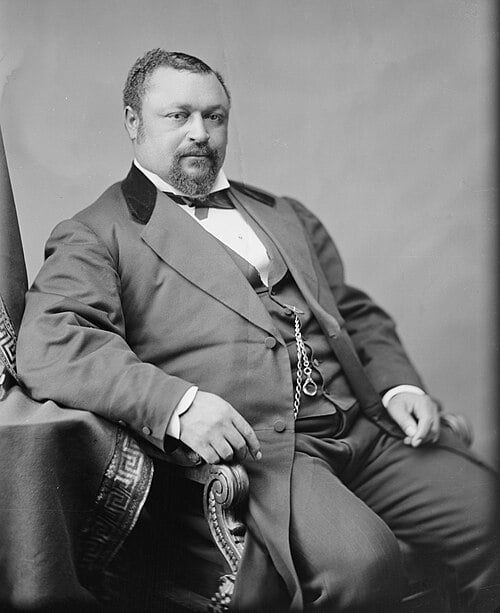
While Mississippi loses Cindy Hyde-Smith’s Republican representation and committee seniority, it gains a Democratic voice within the incoming Senate majority.
Colom’s victory also contributes to a Democratic Senate majority of at least 55 seats. This gives Democrats greater control over the Senate’s legislative agenda, although they would still need additional support to overcome a filibuster. In addition, Colom’s victory provides the Mississippi Democratic Party with momentum heading into the 2027 gubernatorial election.
What Colom’s Victory Could Mean for Mississippi’s Political Future
Colom’s victory in the 2026 Senate election made history in my home state of Mississippi. In a state whose history has been deeply affected by racial discrimination and segregation, a Black man was elected to the U.S. Senate for the first time since the Reconstruction era. The victory also ended a 44-year period without a Democrat being elected to the U.S. Senate from Mississippi.
As a lifelong Mississippian, I enjoy chronicling the state’s history, especially its politics. As with my weekly articles on presidential election history across the United States, I approach these subjects from a historical perspective without endorsing any political party, viewpoint, or ideology.
One lesson both major political parties can take from this election is the importance of reaching beyond their traditional voter bases. Colom reached beyond his traditional Democratic base to appeal to more conservative voters, and that strategy appears to have paid off. Similarly, Trump expanded his support in several traditionally Democratic-leaning areas during the 2020 and 2024 presidential elections. Candidates should never take voters for granted; the right message at the right time can win over unexpected supporters.
Conclusion: A New Chapter in Mississippi Political History
Colom’s victory will undoubtedly stand out as a historic milestone in the political history of Mississippi and the United States. However, it remains uncertain whether this victory signals a broader political realignment in Mississippi. It is important to remember that Colom’s victory came by a relatively narrow margin. Political preferences can shift among independent voters as well as those who identify with either major political party. When economic concerns become a major priority, incumbent candidates and their parties can become more vulnerable to electoral challenges.
Whether Colom’s Senate victory signals a broader shift in Mississippi’s presidential voting patterns remains to be seen. The last Democratic presidential nominee to carry Mississippi was Jimmy Carter, who narrowly won the state in 1976.
In 1980, Ronald Reagan narrowly defeated Jimmy Carter in Mississippi, although Carter retained some support in the South despite his declining national popularity.
In recent decades, Mississippi’s closest presidential elections included 1976, 1980, 1992, and 1996, when the winning candidates carried the state by single-digit margins.
Nevertheless, Colom’s victory does not necessarily indicate that Mississippi is preparing to shift toward Democratic presidential candidates.
Nonetheless, Colom’s victory will remain a significant milestone in a conservative state with a long history of electing Republican senators. Even Colom’s political opponents can recognize how the right message can resonate with voters at the right time. Economic concerns appeared to be particularly important during this election, as many Americans, including Mississippians, continue to face financial pressures.
Sources:
Ballotpedia – Scott Colom: Biography and Election Results.
The New Republic – Mississippi GOP Leader Loses It as Experian Exposes Election Disaster
Editor’s Disclaimer: This article examines Scott Colom’s historic 2026 U.S. Senate victory in Mississippi from a historical, political, and journalistic perspective. The views expressed are intended to provide historical context and analysis and do not constitute an endorsement of any political party, candidate, or ideology.
