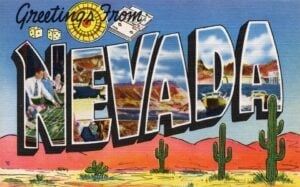
The 36th state admitted to the Union, Nevada has a history spanning more than 160 years. Within Nevada’s statewide history is its long history of voting in presidential elections. Nevada’s presidential election history reveals how its political landscape has evolved over time. For much of its history, Nevada leaned Republican in presidential elections. However, the state became increasingly competitive during the late 20th and early 21st centuries, with Democratic candidates winning several consecutive elections before Republicans regained the state in 2024. Various factors have contributed to Nevada’s political evolution throughout its more than 160-year history. These include, but are not limited to, the following: the influence of population growth, mining, tourism, labor unions, and urbanization. This article examines how these political changes unfolded over time.
Nevada Statehood and Its First Presidential Election
President Abraham Lincoln strongly supported Nevada’s admission to the Union during the Civil War in 1864. Lincoln and Republicans backed Nevada statehood to secure its silver for the Union and gain three electoral votes.
In the 1864 presidential election, wartime President Abraham Lincoln faced Democratic challenger George B. McClellan, a former Union general running on a platform that called for an immediate end to the war. Nevada’s first voters backed Lincoln, signaling strong support for the Union and federal government.
Nevada generally favored Republican presidential candidates during its early years, although the state occasionally supported Democratic and third-party nominees. Nevada’s mining-based economy influenced its political preferences, particularly as debates over silver coinage, currency policy, and protective tariffs became increasingly important to western voters.
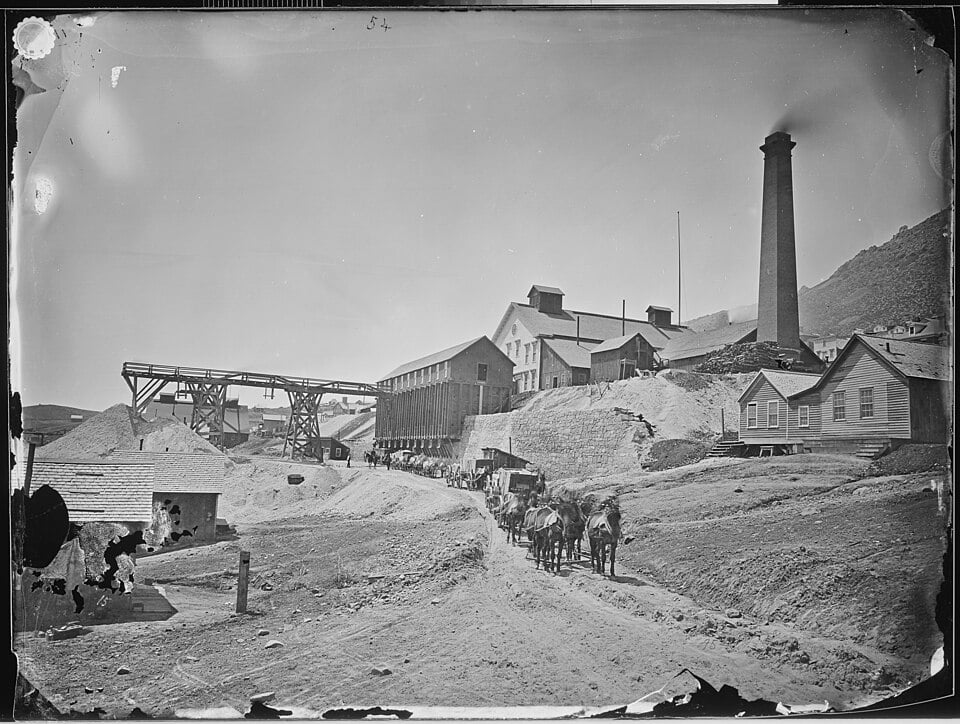
Interestingly, the end of the 19th century brought a significant change in Nevada’s presidential voting patterns. By 1892, disputes over federal silver policy had become a major political issue in the state, reflecting concerns about the economic consequences of limiting silver coinage. This led the state to support 1892 populist candidate James B. Weaver. That year, Weaver and the Populists championed “Free Silver” to restore prosperity through silver coinage.
Silver Politics, the Progressive Era, and Economic Change (1896-1928)
The Free Silver movement led Nevada to repeatedly support populist candidates into the 20th century.
In the 1896 and 1900 presidential elections, Nevada supported Democratic nominee William Jennings Bryan, who campaigned on a platform that included the free coinage of silver.
During the Progressive Era, Nevada’s economic and political landscape changed significantly. Issues such as political reform, direct primaries, women’s suffrage, and labor protections increasingly influenced Nevada’s electorate. Meanwhile, ranching, agriculture, and railroad development continued to contribute to Nevada’s economy alongside mining.
Four years after voting for William Jennings Bryan in 1900, Nevada voted overwhelmingly for Republican nominee Theodore Roosevelt. By this time, the Democratic Party had shifted away from the “Free Silver” populist platform. Roosevelt’s Square Deal, which emphasized corporate regulation, consumer protection, and conservation, also appealed to many western voters.
The Panic of 1907 created additional economic uncertainty across the United States, including in Nevada. In 1908, Roosevelt declined to seek reelection, while William Jennings Bryan returned as the Democratic nominee. Bryan narrowly carried Nevada in 1908, marking his third presidential victory in the state after winning it in 1896 and 1900, although he lost all three national elections.
Before the 1912 U.S. presidential election, the Republican Party was split heavily. President William Howard Taft, Theodore Roosevelt’s successor, had adopted policies that his predecessor disagreed with. This prompted Roosevelt to return as a Progressive nominee. Meanwhile, the Democratic Party capitalized on the Republican Party’s fracture with Democratic nominee Woodrow Wilson’s campaign. Wilson carried Nevada in 1912, benefiting from the division within the Republican Party and support among voters attracted to the Democratic platform. Roosevelt’s Progressive platform secured him second place in Nevada in 1912, a notable achievement for a third-party candidate. Four years later, Wilson won Nevada again, increasing his margin of victory in the state. Nevada voters backed Wilson in 1916, believing he had kept the country out of war.
Nevada’s Shift from Progressive Politics to Republican Dominance
The 1920s brought three consecutive Republican presidential victories nationwide, and Nevada supported the Republican nominees in each election. In 1920, amid backlash against Wilson and the League of Nations, Nevada decisively backed Republican Warren Harding.
Four years later, Republican Calvin Coolidge carried Nevada by a narrower margin than Harding had in 1920. Progressive candidate Robert La Follette also drew significant support, keeping the race close.
In 1928, Republican Herbert Hoover defeated Democrat Al Smith in Nevada by approximately 13 percentage points. Hoover’s victory reflected the strength of the Republican coalition during the election, although Smith maintained considerable support among voters across the country.
However, things were about to change in Nevada and the rest of the United States, for that matter.
The Great Depression and the Democratic Era (1932-1948)
The Great Depression, which followed the collapse of the U.S. economy, severely affected Nevada. In 1932, Democrat Franklin D. Roosevelt defeated incumbent President Herbert Hoover in a landslide, beginning a streak of five consecutive Democratic presidential victories in Nevada. During FDR’s presidency, New Deal policies brought federal investment, jobs, and infrastructure to Nevada. The popularity of these programs enabled Roosevelt to win Nevada decisively in both 1936 and 1940.
The 1944 U.S. presidential election, however, saw the popular Democratic president claim Nevada by a smaller margin. By this time, the country was focused increasingly on World War II and its aftermath, while the Republican Party was rebuilding its political strength. When F.D.R. died in office in 1945, his vice president Harry Truman assumed the presidency. Truman narrowly defeated Republican nominee Thomas Dewey in Nevada and secured an unexpected victory in the national election. The Democratic dominance of Nevada and in many other parts of the country was about to come to a halt.
Post-War Politics and Nevada’s Republican Shift (1952-1988)
The 1950s saw a political realignment for Nevada as the state shifted to a Republican voting bloc. Former General Dwight D. Eisenhower entered the presidential race with considerable popularity after serving as Supreme Allied Commander in Europe during World War II. Eisenhower’s charisma and appeal helped him win over voters across party lines and political ideologies. Eisenhower pledged to maintain certain popular New Deal programs while pursuing his own Republican policy priorities. He comfortably carried Nevada in both 1952 and 1956 as part of two nationwide presidential victories.
Kennedy, and the Democratic Victory of 1964
The 1960 presidential election proved to be one of the closest in U.S. history. In the end, Democratic nominee John F. Kennedy narrowly defeated Republican Richard Nixon, who had served as Eisenhower’s vice president. The 1950s brought substantial growth to Nevada, particularly in Las Vegas, where the tourism and casino industries continued to expand. Nixon’s political ties to neighboring California may also have contributed to his familiarity among some Nevada voters. Kennedy also attracted support from some voters associated with Nevada’s growing entertainment and hospitality industries. Kennedy’s Catholic faith was also a notable part of the 1960 campaign, although its influence on voting patterns in Nevada would require more specific historical evidence. Mirroring his narrow nationwide win, Kennedy was able to win Nevada by a small margin in 1960.
In November 1963, the nation was rocked by the assassination of President John F. Kennedy. President Lyndon B. Johnson, who assumed office following Kennedy’s assassination, benefited from public sympathy and the political momentum surrounding the transition in leadership. Johnson also benefited from concerns among some voters that Republican nominee Barry Goldwater’s conservative positions were too far outside the political mainstream. In that year’s election, Nevada voted for Johnson decisively over Goldwater. However, although the Democrats would lose the state by single digits in 1968 and 1976, 1964 would prove to be the last time a Democratic presidential nominee would win Nevada until 1992.
Nixon, Reagan, and the Era of Republican Dominance
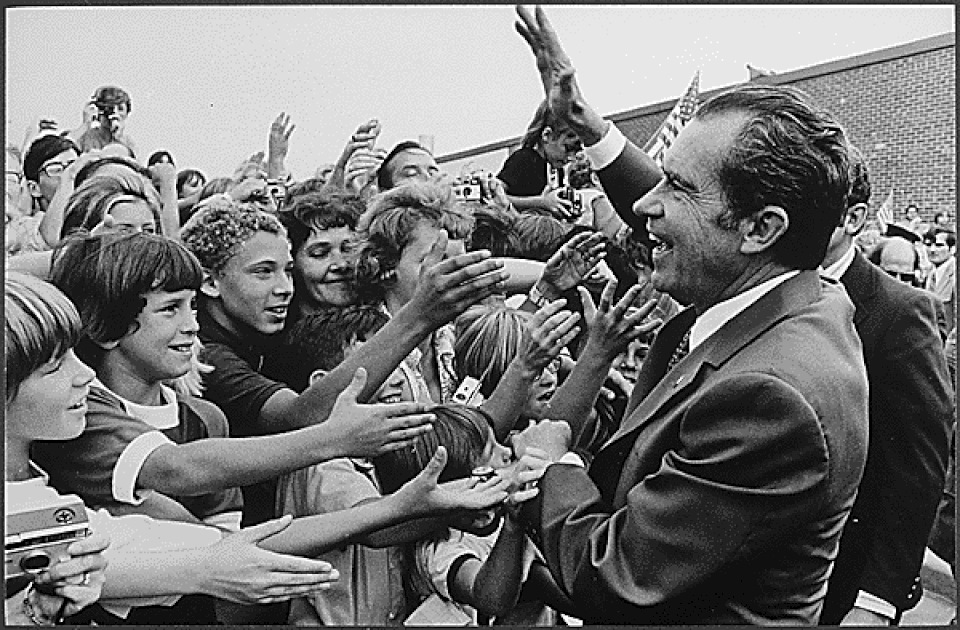
Richard Nixon would return as the Republican nominee in 1968. Nixon faced Democratic nominee Hubert Humphrey, who had served as Lyndon Johnson’s vice president, and independent candidate George Wallace, the governor of Alabama. While Humphrey maintained support among many Democratic voters in Nevada, Nixon performed strongly among Republican-leaning suburban voters, including some who may have supported Johnson in 1964. Republicans also attracted support from some voters who had traditionally favored Democratic candidates. Wallace’s independent candidacy divided the vote, preventing either major-party nominee from securing a majority in Nevada. Nonetheless, Nixon ended up winning Nevada in 1968 by a little over eight points.
Four years later, Democratic nominee George McGovern faced similar challenges to those encountered by Barry Goldwater in 1964, as many voters considered his political positions too liberal for the mainstream. In that year’s election, President Nixon won a massive landslide, and his numbers in Nevada reflected this trend.
Watergate, Ford, and Nevada’s Resistance to Democratic Gains
By the time of the 1976 presidential election, many Americans wanted to move beyond the political divisions surrounding the Vietnam War and the Watergate scandal. Republican President Gerald Ford had assumed office following Nixon’s resignation in the aftermath of Watergate. However, many voters were drawn to Democratic nominee Jimmy Carter, a former governor of Georgia who campaigned as a Washington outsider.
Carter performed well across much of the South and attracted support from rural voters, urban communities, and organized labor in several parts of the country. However, he was unable to carry Nevada. Although Carter attracted support in parts of urban Clark County and some working-class communities, Ford maintained enough support among Republican voters across the state to carry Nevada by a single-digit margin.
Ford ultimately won Nevada by approximately 4.4 percentage points, while Carter secured a narrow victory in the national election.
Reagan’s Landslides and the Republican Stronghold (1980–1988)
Jimmy Carter’s presidency, despite some diplomatic and legislative achievements, was marked by high unemployment, double-digit inflation, and the Iranian Hostage Crisis. Republican Ronald Reagan, who some voters initially considered too conservative, campaigned in 1980 on a promise to restore America’s economic strength and international standing. Reagan defeated Carter in a national landslide and, not surprisingly, carried the state of Nevada with some of the best numbers for a nominee in the state’s history. Carter received a significantly smaller share of Nevada’s vote than Reagan, reflecting the Republican nominee’s strong performance in the state. Independent candidate John Anderson also attracted support in 1980, receiving slightly more than 7% of Nevada’s vote. Anderson appealed to some moderate Republicans who considered Reagan too conservative, as well as disillusioned Democrats dissatisfied with the Carter administration.
In 1984, with the economy doing well, President Ronald Reagan, whether he and his presidency were directly responsible for the economic recovery or not, was more popular than ever. In that year’s presidential election, Reagan secured an even larger victory, defeating Democratic nominee Walter Mondale, who had served as Carter’s vice president, by a substantial margin. Once again, Reagan’s massive nationwide win was replicated in the results in Nevada. Four years later, Republicans secured a third consecutive presidential victory, with George H.W. Bush, Reagan’s vice president, comfortably carrying Nevada over Democratic nominee Michael Dukakis. Bush’s victory marked the last time a Republican presidential nominee would carry Nevada by a double-digit margin. The state was about to become a competitive one.
Nevada’s Emergence as a Competitive Swing State (1992-2012).
Although George H.W. Bush maintained high approval ratings in his first few years in office, by 1992, the incumbent president was on shaky ground. The country was experiencing an economic downturn, while Bush also faced a primary challenge from conservative commentator Pat Buchanan.
Meanwhile, Bill Clinton of Arkansas was campaigning as a New Democrat who championed policies that could appeal to liberals, moderates, and even some conservatives. Meanwhile, independent candidate Ross Perot of Texas gained support with a populist campaign that appealed to voters concerned about the economy, federal spending, and the political establishment.
Clinton and Perot both attracted considerable support in Nevada, reflecting the state’s changing political landscape and the growing competitiveness of its suburban electorate. As President George H.W. Bush lost his reelection campaign to Clinton, Nevada narrowly supported the Democratic nominee for the first time since 1964.
Perot received substantial support in Nevada in 1992, capturing slightly more than 26% of the state’s vote.
Clinton’s Consecutive Wins and the Influence of Ross Perot
By 1996, President Bill Clinton was presiding over a growing economy and enjoying considerable public support, helping strengthen his reelection campaign. That year’s election saw Clinton face Republican nominee Bob Dole and Ross Perot, who was running as the Reform Party candidate.
Benefiting from a strong economy and facing a weaker third-party challenge from Perot, Clinton won reelection in 1996 and narrowly carried Nevada for a second consecutive time. Despite Clinton’s narrow win over Dole, 1996 proved the first time since the 1940s that a Democratic nominee had won Nevada in consecutive elections.
However, due to the extremely small victory, it was proof that while Nevada’s voting habits had changed within a few years, it was not fully devoted to nominees of either major party. Perot received slightly more than 9% of Nevada’s vote in 1996, a considerable decline from his 1992 performance.
Nevada’s Changing Political Landscape in the Early 2000s
Like the 1960 presidential election, the 2000 contest was one of the closest in modern American political history. Republican nominee George W. Bush, son of former President George H.W. Bush, narrowly defeated Democratic nominee Al Gore, who had served as Bill Clinton’s vice president, following a highly controversial vote count in Florida. He ended up flipping Nevada in 2000 back to the Republican column, although only by a little over 3 points. Bush’s victory reflected the continued strength of Republican support in Nevada, although the state’s electorate remained closely divided. Four years later, Bush won reelection and carried Nevada for a second consecutive time, defeating Democratic nominee John Kerry by approximately 2.59 percentage points. This would be the last time that a Republican nominee would win Nevada until 2024 and the last time to date that a Republican nominee has won Nevada in consecutive elections.
The Bush Years and Nevada’s Return to Democratic Support
Like his father before him, George W. Bush initially enjoyed considerable public support during his presidency. Although his presidency initially faced controversy following the 2000 election, Bush’s approval ratings increased substantially after the September 11, 2001, terrorist attacks. However, growing opposition to the wars in Afghanistan and Iraq, along with other domestic concerns, contributed to declining support for his administration during his second term.
Although Bush had secured reelection in 2004, opposition to the wars in Afghanistan and Iraq, combined with the financial crisis of 2008, weakened the Republican Party ahead of the next presidential election. During the 2008 presidential campaign, Democratic nominee Barack Obama emphasized a message of political and economic change.
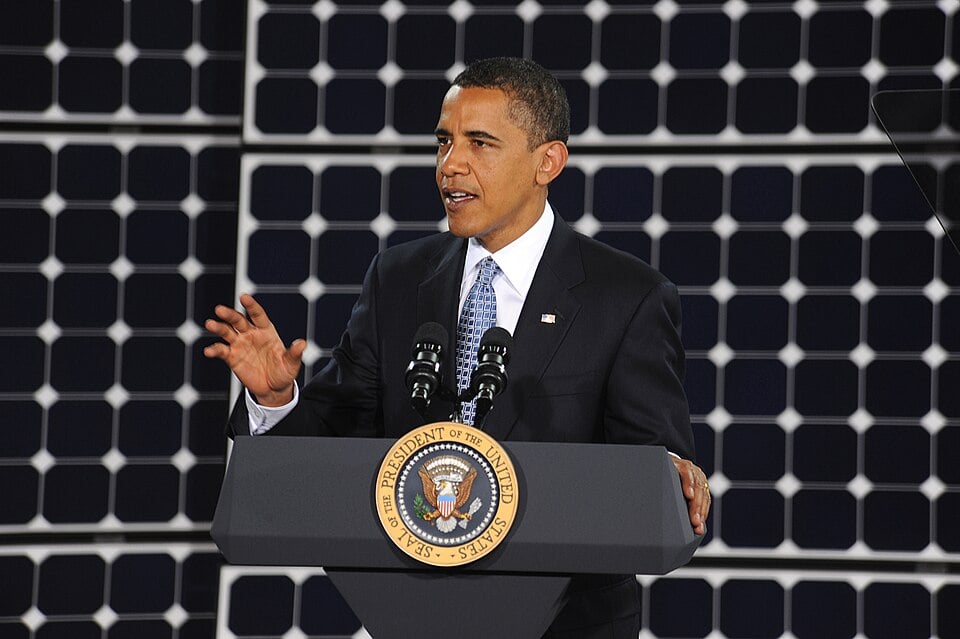
Obama defeated Republican nominee John McCain via an electoral college landslide and, in doing so, flipped back Nevada to the Democratic column. Obama’s 2008 victory in Nevada was particularly decisive, marking the last time a Democratic presidential nominee, or any presidential nominee for that matter, would carry the state by a double-digit margin.
The Changing Balance Between Nevada’s Urban and Rural Voters
In the 2012 presidential election, Obama won reelection over Republican nominee Mitt Romney, although his support had weakened in some parts of the country amid ongoing economic concerns. Although Obama secured another comfortable win in Nevada in 2012, it was in the single digits. Since then, no Democratic presidential nominee has matched Obama’s margins of victory in Nevada in either 2008 or 2012. Although Obama’s strongest performances came in Nevada’s urban population centers, he also maintained support in some rural communities during both elections. At the same time, shifting political preferences among some urban and working-class voters would become increasingly important in subsequent elections. These developments would help establish Nevada as one of the country’s increasingly competitive presidential battlegrounds.
Recent Presidential Elections: 2016-2024
In 2016, Republican nominee Donald Trump defeated Democratic nominee Hillary Clinton in the Electoral College, despite pre-election polling that generally favored Clinton. Clinton nevertheless won the national popular vote. Although Clinton carried Nevada in 2016, her margin of victory was substantially smaller than Obama’s in 2012, reflecting the state’s increasingly competitive political environment.
Four years later, amid the COVID-19 pandemic, voters faced a presidential contest between Republican incumbent Donald Trump and Democratic nominee Joe Biden, who had served as Barack Obama’s vice president. Trump entered the election with strong support among many Republican voters, although his administration faced criticism over its handling of the pandemic and the resulting economic downturn. Meanwhile, Biden campaigned on restoring stability to the federal government and addressing the public health and economic challenges facing the country.
Biden won the 2020 presidential election by a substantial margin in the national popular vote, although his Electoral College victory was considerably closer. He narrowly carried Nevada, winning by approximately 2.39 percentage points. The state’s Democratic margin was nearly identical to Hillary Clinton’s approximately 2.42-point victory in 2016, indicating little change in its statewide presidential voting patterns.
Nevada’s Shift Toward Republicans in Recent Elections
The 2024 presidential election saw Vice President Kamala Harris secure the Democratic nomination after President Joe Biden withdrew from the race, while Donald Trump returned as the Republican nominee. Trump narrowly defeated Harris, becoming the second president in American history, after Grover Cleveland, to serve two nonconsecutive terms. Trump also narrowly carried Nevada, becoming the first Republican presidential nominee to win the state since George W. Bush in 2004. Trump’s improved performance among Hispanic voters contributed to his victory in Nevada. Exit polling indicated that he received substantially more support from Hispanic voters than Republican presidential nominees had in previous elections. Nonetheless, it was still a very narrow victory.
Conclusion
Nevada’s political transformation highlights its evolution from a reliable Republican stronghold into one of the nation’s premier presidential battlegrounds. Nevada’s electoral future will continue to be influenced by population growth and economic conditions in major population centers such as Las Vegas in Clark County and Reno in Washoe County. These metropolitan areas contain the majority of Nevada’s voters, making their suburbs and diverse working-class communities important constituencies for both major political parties.
Nevada’s political future will depend on demographic shifts, economic conditions, and voter participation.
Changing political preferences among Hispanic, working-class, and service-sector voters mean neither party can take Nevada for granted. Nevada’s system of automatically mailing ballots to active registered voters, along with its automatic voter registration program, will continue to influence voter participation and election administration. Nevada remains a competitive presidential battleground, where changing voter preferences and closely contested elections could make the state important in determining future presidential outcomes.
Sources:
Nevada Secretary of State – Election Results, 1962 to Present
Federal Election Commission – Election Results and Voting Information
The American Presidency Project – Presidential Election Results
Nevada Legislature – Political History of Nevada
Nevada State Library, Archives and Public Records – History of the Nevada Constitution
Editor’s Disclaimer: This article examines Nevada’s presidential election history from its admission to the Union in 1864 through the 2024 presidential election. Historical election results, political developments, and demographic trends are discussed using publicly available government records, historical archives, and research sources. References to political parties, candidates, and voting patterns are intended for historical and informational purposes and do not represent an endorsement of any political party or candidate.
