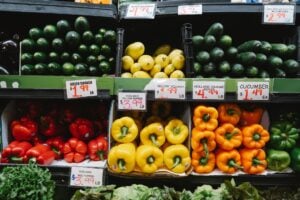
From Raley’s and Grocery Outlet closures to rising food prices and fierce competition, California supermarkets are navigating a retail environment where keeping shoppers while protecting already-thin margins is becoming increasingly difficult.
CALIFORNIA — August 26, 2026 — California shoppers are still filling their carts, but the stores selling them groceries are facing an increasingly complicated business environment.
California-based supermarket chain Raley’s is preparing to close several locations, joining other grocery retailers that have recently reevaluated their store footprints across the state.
The closures do not necessarily signal the disappearance of traditional supermarkets. In fact, some of the same companies closing underperforming locations are simultaneously opening stores elsewhere.
Instead, the changes illustrate a larger challenge facing the grocery industry: operating a profitable supermarket requires balancing food costs, labor, real estate, transportation and other expenses while competing for consumers who have become increasingly sensitive to what they spend at checkout.
Raley’s Is Closing Stores — But It Is Not Abandoning California
West Sacramento-based Raley’s plans to close its Brentwood location on November 3, followed by a store in Elko, Nevada, in December and a Petaluma, California, location in January 2027, according to the Los Angeles Times.
A Raley’s location in Antioch also closed earlier in 2026, while a Nob Hill Foods store in Los Gatos is expected to close in 2027.
The company, however, says the decisions should not be interpreted as a broad retreat.
Raley’s told the Los Angeles Times that the Brentwood, Elko and Petaluma decisions reflect local market conditions and the long-term financial sustainability of individual stores rather than a companywide downsizing effort.
That distinction is important.
Raley’s continues to operate more than 100 grocery stores and employs approximately 11,500 people. The company is also planning a new location in Madera expected to open in March 2027.
In other words, the story unfolding in California is not simply about grocery stores disappearing. Retailers are increasingly determining which individual locations still make financial sense.
Grocery Outlet Is Making Similar Decisions
Raley’s is hardly alone.
Earlier in 2026, California-based Grocery Outlet announced plans to close 36 underperforming stores nationwide, including nine California locations.
The closures followed a difficult financial year. According to Los Angeles Times reporting on Grocery Outlet, the company recorded a $225 million net loss for fiscal 2025, compared with a $39 million profit the previous year.
The affected California locations included stores in Southern and Central California.
But Grocery Outlet provides another example of why the current environment is more complicated than a simple retail decline.
After closing stores, the company resumed expansion in parts of California, including new locations planned or opened in communities such as Ontario Ranch, Ramona, San Francisco, Clovis and Petaluma.
That suggests grocery companies are not necessarily losing confidence in California consumers. Instead, they are becoming more selective about where stores operate and what kinds of locations can generate sustainable returns.
Grocery Prices Are Still Rising
For consumers, one of the most visible pressures remains the price of food itself.
According to the U.S. Bureau of Labor Statistics, grocery prices in the Los Angeles-Long Beach-Anaheim region increased 3.9% during the 12 months ending in July 2026.
Some categories increased considerably faster.
Fruit and vegetable prices were 9.4% higher than a year earlier, while nonalcoholic beverages increased 5.1%. The broader food index increased 3.2%.
Nationally, grocery inflation has moderated substantially from the extraordinary increases experienced earlier in the decade, but prices continue moving upward.
The U.S. Department of Agriculture’s August 2026 Food Price Outlook forecasts food-at-home prices will increase approximately 2.5% during 2026.
That creates an unusual challenge for supermarkets.
Stores need to pass at least some increases in wholesale and operating costs to customers, but raising prices can push increasingly budget-conscious shoppers toward cheaper alternatives.
Competition for the Grocery Customer Is Intense
The traditional supermarket is also competing against far more than the grocery store across town.
Discount chains, warehouse clubs, mass retailers, delivery platforms and online retailers are all fighting for a portion of household food spending.
Grocery Outlet, for example, competes with companies including Aldi, Trader Joe’s and Walmart, while retailers such as Amazon have spent years experimenting with ways to capture more grocery spending.
That competition matters because scale can be a major advantage in the grocery business.
Large retailers can spread distribution, technology, advertising and administrative costs across enormous networks. Companies selling groceries alongside thousands of other categories can also approach the economics differently than a regional supermarket dependent heavily on food sales.
Meanwhile, discount-oriented consumers can increasingly shop across multiple stores rather than remaining loyal to a single supermarket.
A customer might purchase bulk household products from one retailer, produce from another, discounted packaged foods somewhere else and have additional items delivered directly to the home.
Every one of those transactions potentially removes part of the traditional supermarket’s shopping basket.
Labor Is Another Major Expense
California also remains one of the more expensive states in which to employ workers.
The California Department of Industrial Relations lists the statewide minimum wage at $16.90 per hour in 2026, with some California cities and counties requiring even higher local minimum wages.
Supermarkets are labor-intensive operations.
Cashiers, stockers, meat and seafood departments, bakeries, produce departments, warehouse workers, cleaners, managers and other employees are required to keep stores functioning from early morning until late at night.
Higher wages can benefit workers, but from an operator’s perspective, labor remains one of several expenses that must ultimately be supported by store revenue.
Automation and self-checkout can reduce certain labor requirements, but grocery stores cannot easily eliminate the human workforce required to receive, stock, prepare and manage thousands of perishable and nonperishable products.
Real Estate Can Make or Break a Location
Location has always been critical in retail, but supermarkets have particularly demanding real estate requirements.
A full-sized grocery store needs substantial floor space, parking, refrigeration, loading access and enough nearby households to generate consistent shopping traffic.
A location that worked financially years ago may become less attractive as leases change, neighborhoods evolve or new competitors enter the area.
Raley’s planned closure of its Nob Hill Foods location in Los Gatos offers one example. The company said it decided not to renew the lease at that location.
This helps explain why a supermarket company can close one California store while opening another somewhere else.
The relevant question is no longer simply whether California is a good grocery market. Retailers have to determine whether a particular building, lease, neighborhood and competitive environment work together financially.
Transportation and Energy Costs Reach the Grocery Aisle
Supermarkets also sit at the end of an enormous logistics system.
Produce, meat, dairy products, frozen foods, beverages and packaged goods must travel through farms, processors, warehouses and distribution centers before reaching store shelves.
Many products also require refrigeration throughout portions of that journey.
Energy and transportation costs therefore affect the grocery industry well before a shopper walks through the door.
Southern California illustrates that pressure particularly well. BLS data showed gasoline prices in the Los Angeles area were 23% higher in July 2026 than a year earlier, even though gasoline prices declined during the month itself.
Those costs can ripple through distribution networks while simultaneously affecting consumers, who have less discretionary money available when transportation and other household expenses rise.
Consumers Are Changing How They Shop
Perhaps the biggest challenge is that grocery shoppers themselves have become more strategic.
Years of inflation have encouraged consumers to compare prices, use loyalty programs, seek discounts, switch brands and divide purchases among several retailers.
For grocery companies, attracting shoppers is only part of the equation.
The store must also persuade those customers to purchase enough products — at sufficient margins — to justify the cost of operating that particular location.
That calculation helps explain why store closures and store openings can happen simultaneously.
A grocery chain may still believe strongly in California while deciding that a particular store no longer works.
California Is Not Running Out of Grocery Stores
The recent closures should therefore be viewed with some perspective.
California’s grocery industry remains enormous, and retailers continue investing in new locations.
But the market appears to be undergoing a period of optimization.
Raley’s is closing stores while planning another. Grocery Outlet closed underperforming locations and then resumed opening stores in California.
The message from the industry is increasingly clear: simply having customers is not enough.
A modern supermarket must have the right location, purchasing strategy, labor structure, supply chain and customer base while offering prices compelling enough to keep shoppers from going somewhere else.
For consumers, the grocery store remains an essential part of everyday life.
For the companies operating those stores, however, selling groceries in California has become an increasingly complicated business.