
The state of New Jersey has also played an interesting role in U.S. Presidential elections. Over more than two centuries, the Garden State’s voting patterns have shifted dramatically. In the nation’s early years, New Jersey was a fierce battleground defined by deep partisan divisions between Federalists and Democratic-Republicans. Eventually, it became a swing state that shifted between Democratic and Republican presidential nominees. Today, New Jersey is a reliably Democratic state when it comes to presidential elections. However, recent contests have seen it become more competitive. The state’s presidential voting history provides a useful way to examine how New Jersey’s political patterns have changed over hundreds of years.
New Jersey’s Early Presidential Elections
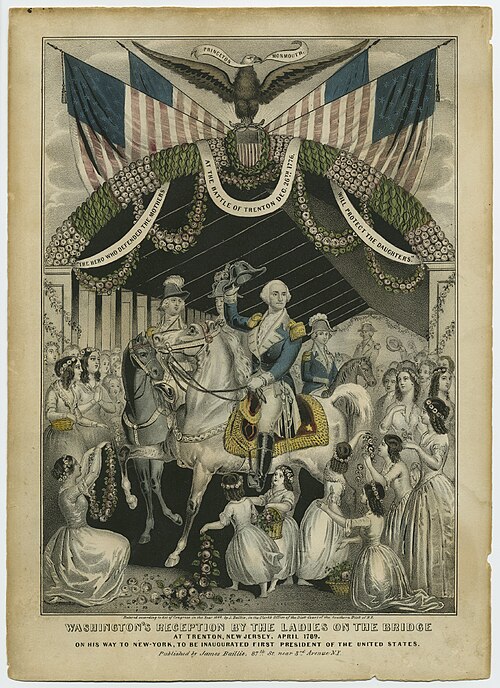
In the early days of America’s presidential elections, the New Jersey Legislature made the appointments for the state’s electors instead of succumbing to a general vote in New Jersey. Though New Jersey did later approve elections statewide to choose electors, this method varied from election to election in the state during its early history. Thus, outcomes in the elections of the early years of New Jersey’s history were taken as votes of the legislature and not the people. The first elections showed the split emerging between the Federalists and the Democratic-Republicans.
The political backing of the parties differed in different parts of the state; the Federalists were very strong in some parts of South Jersey and in some urban and central counties, while there was more support for Democrat- Republicans in some parts of northern and northwestern New Jersey. These regional differences highlight the state’s various political, economic, and geographical proclivities.
The 19th Century: A Shifting Political Landscape
The political landscape of New Jersey witnessed a drastic change in the 19th century.
During the 1830s and 1840s, the Whig Party emerged as a powerful force, appealing to the state’s growing manufacturing sectors. However, as national anti-slavery sentiment fractured the Whigs, the newly formed Republican Party rose to take their place.
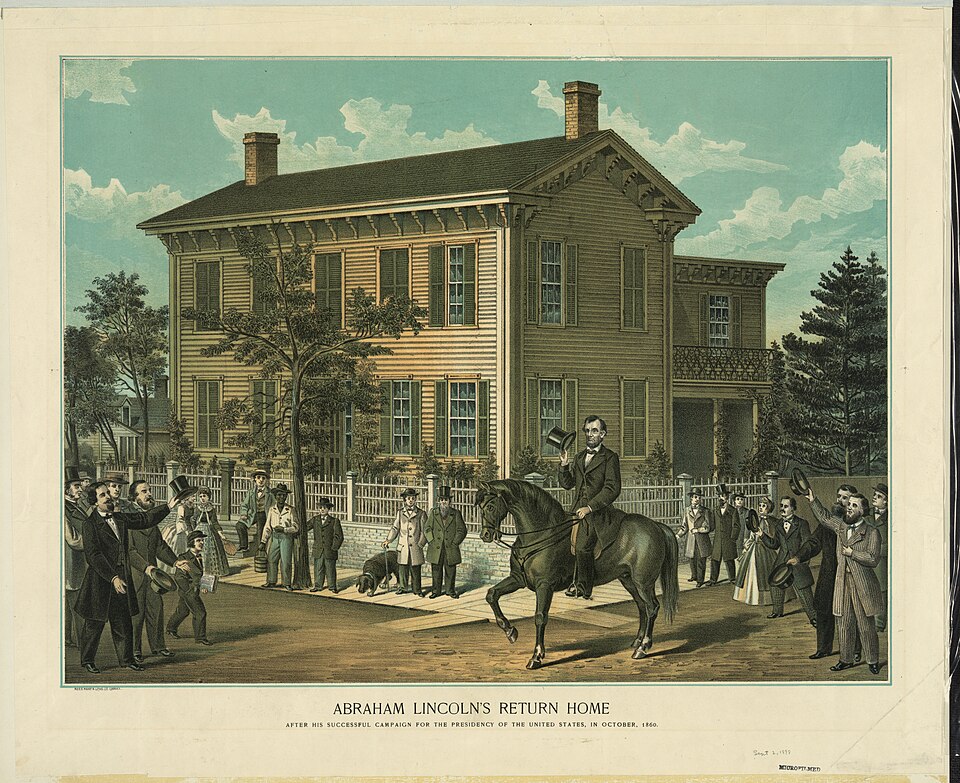
New Jersey held a highly unique and cautious political position during the Civil War era. In 1860, Abraham Lincoln won four of New Jersey’s seven electoral votes, while Democrat Stephen A. Douglas received the other three. In 1864, New Jersey voted against Lincoln entirely, giving all seven of its electoral votes to Democrat George B. McClellan.
After the war, quick industrialization along with a large movement of Europeans dramatically changed the demographics of the state. Cities like Newark and Paterson exploded with industries, creating a significant urban working class. These changes in economy and demographics enabled both the Republicans and the Democrats to become the two dominant political parties of the state. Although a large portion of the working class as well as immigrants adhered to the Democratic Party, those people living in the countryside and business elite were becoming active supporters of the Republican political party.
The 20th Century: From Swing State to Democratic State
When the 20th century began, New Jersey cemented itself as a national swing state. Depending on the status of the economy, the state would flip between voting for the Democratic and Republican presidential nominees. In 1912 and 1916, for instance, New Jersey voted for Democrat Woodrow Wilson. However, during the ‘Roaring Twenties’, residents of the Garden State cast the majority of their votes for the Republican candidates.
The Great Depression and Political Realignment
As with the majority of other states in the US, the Great Depression caused a huge political realignment in New Jersey. The Garden State had been hit hard by the nationwide economic collapse. Democrat Franklin D. Roosevelt carried New Jersey in all four of his nationwide landslides as an alliance of working-class laborers and immigrant communities showed strong support for the Democratic Party.
The end of World War II marked another shift in New Jersey’s presidential voting habits. The cities of the state remained reliably Democratic. However, the rapidly growing suburbs in New Jersey at the time contained a lot of fiscally conservative voters, who were often more likely to support the Republican nominee. Therefore, New Jersey became competitive once again. This was seen in 1960 when Democrat John F. Kennedy very narrowly won the state. Four years later, New Jersey joined the majority of the rest of the country in supporting Democrat Lyndon Johnson by double digits. However, four years later, the competitive nature of the state returned as Republican Richard Nixon won New Jersey by a slim margin. In 1972, Nixon won decisively in New Jersey along with the majority of the United States. In the 1976 U.S. Presidential Election, Gerald Ford narrowly carried New Jersey despite losing the national election to Jimmy Carter. The growing Republican dominance in New Jersey suburbia was put on full display in the 1980s as Ronald Reagan won the state handily in both 1980 and 1984, as did George H.W. Bush in 1988. However, things were about to change.
New Jersey in the Modern Presidential Era
George H.W. Bush’s double-digit victory in New Jersey in 1988 made him the last Republican presidential nominee to carry the state. In 1992, Bush remained competitive in the Garden State, but Democrat Bill Clinton narrowly carried New Jersey. Clinton was able to maintain working-class and immigrant support while presenting economic proposals that attracted suburbanites who had previously voted staunchly Republican. In 1996, Clinton won New Jersey very comfortably, as did his Vice-President Al Gore in 2000. However, while suburbanites in New Jersey were starting to move more towards the Democratic Party, working-class and rural voters were starting to turn away.
New Jersey’s Democratic Shift
In 2004, George W. Bush remained competitive in New Jersey, although Democrat John Kerry ultimately carried the state by a single-digit margin. By the time the 2008 U.S. Presidential election rolled around, the country was in economic turmoil, and the opposition to Bush’s foreign policy agendas had intensified. That year, New Jersey supported Barack Obama by double digits and would do the same in 2012.
The 2016 U.S. Presidential election saw Donald Trump, who was from neighboring New York, running as the Republican nominee against Democrat Hillary Clinton. Although this year would prove to be another successful year for Democrats in the Garden State, there were signs that traditional voting blocs that had previously been supportive of Democrats were hemorrhaging their allegiance to the party. Trump was able to crack 40 percent of the vote in New Jersey in both 2016 and 2020, the year that Joe Biden became the most recent Democratic nominee to carry New Jersey by double digits. The 2024 U.S. Presidential election saw Donald Trump become the second-closest Republican presidential nominee to winning New Jersey since George H.W. Bush carried the state in 1988. Trump won 46.1 percent of the vote, while Democratic nominee Kamala Harris won 52.0 percent, giving Harris a 5.9-point victory. It was also the first time since 2004 that a Republican presidential nominee had lost New Jersey by single digits.
The history of presidential voting in New Jersey reflects more than two centuries of political change. The state has shifted from an early battleground between competing political factions to a swing state and, more recently, a Democratic-leaning state. Its presidential elections offer a useful window into the broader social, economic, and political development of New Jersey.
Sources:
New Jersey Department of State — Election Information and Results Archive
National Archives — 1860 Electoral College Results
New Jersey State Archives Searchable Databases
The American Presidency Project — 1864 Presidential Election
Editor’s Disclaimer: This article provides a historical overview of New Jersey’s presidential voting history and is intended for informational purposes. Election results and historical information are based on publicly available government, archival, and academic sources. While every effort has been made to present the information accurately, historical records and election data may be subject to updates or differing interpretations.
