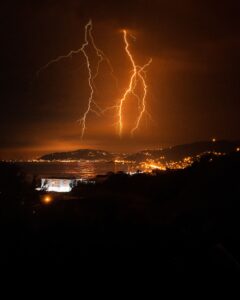
The lightning that strikes during thunderstorms has both frightened and piqued the imaginations of millions of people worldwide. While beautiful-looking, lightning strikes are very dangerous and can cause great harm and destruction. Interestingly, the majority of the lightning strikes that accompany storms tend to occur most often in the summer.
Why Summer Produces More Thunderstorms
There’s no denying that lightning can occur at any time in a given calendar year; it tends to accompany the summer months especially. The reason for this ties in greatly with the hot weather that occurs within this particular season.
During the warmer months, the atmosphere is usually unstable. When the ground heats up due to the sun’s rays, moist air rises up quickly in the atmosphere. The rising warm air meets the cold air in the clouds, leading to an imbalance of electric charges in the atmosphere, and when the charges build up and accumulate to a certain level, they discharge as lightning.
Certain areas experience more lightning than others because of their proximity to warm, moist air and terrain that forces air upward. There is great advice concerning actionable advice on what to do and what to avoid to stay safe during a thunderstorm, such as seeking shelter in enclosed buildings and avoiding plumbing and electrical cords.
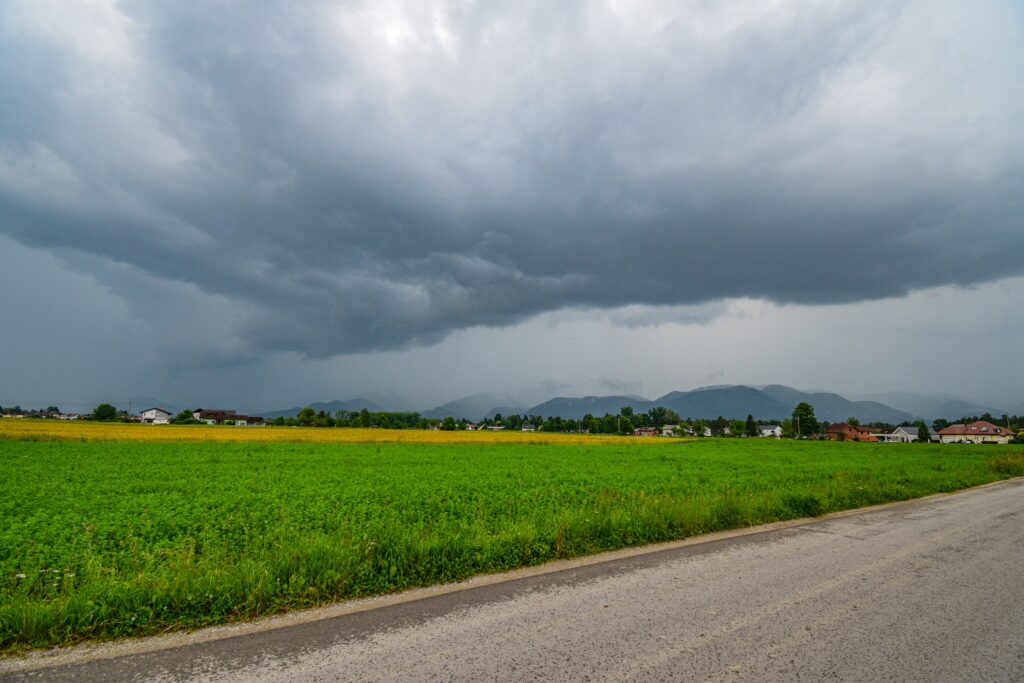
Of course, you can’t have lightning without a storm, can you? And these storms that produce lightning are also connected to the warmer temperatures. Warm summer temperatures heat the Earth’s surface rapidly throughout the day. The warm, moist air provides the core energy that thunderstorms need to develop. This warm air naturally holds significantly more water vapor than cold air. The hot air rises really fast due to convection. Because this air heats up and rises, it sends water vapor into the cooler upper atmosphere, where it undergoes rapid condensation. So, in the process of condensation, heat energy is released, making the air continue rising. So storms create these large clouds – the cumulonimbus, which are often visible in the sky as tall and anvil-shaped clouds producing lots of rain and lightning.
How Lightning Forms
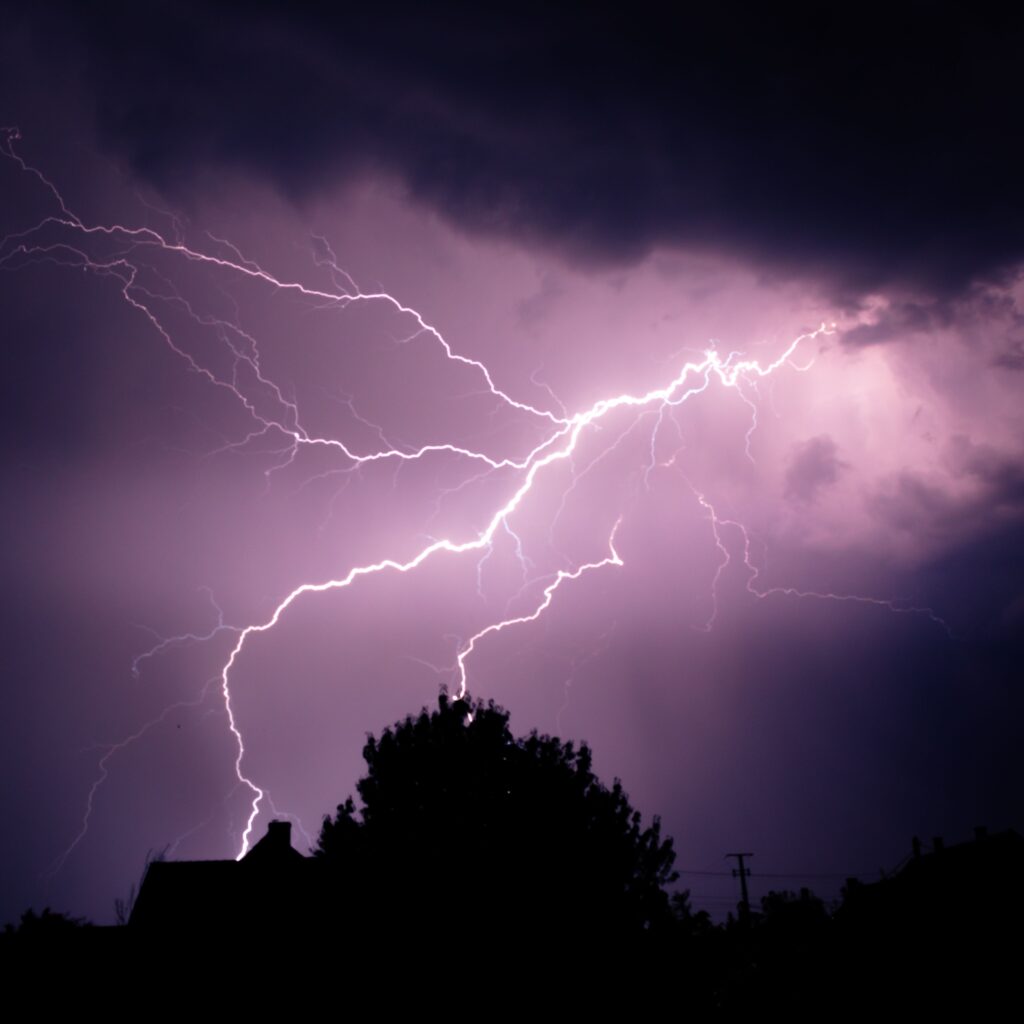
The big question on a lot of people’s minds is, “How does lightning form at all?” It all starts inside a cumulonimbus storm cloud where fierce, upward and downward air currents cause millions of lightweight ice crystals and heavier, frozen water droplets (graupel) to constantly collide. These millions of microscopic collisions scrape electrons away from the rising particles and transfer them to the falling particles. The lighter ice crystals carry positive charges to the top of the cloud, while heavier graupel brings negative charges down to the base. The massive physical separation of positive and negative poles creates an intensely powerful electric field within the storm. Air naturally acts as an electrical insulator, holding the charges apart. Lightning occurs only when the electrical imbalance becomes too great, overpowering the air’s insulation in a sudden flash.
Why Thunder Follows Lightning
Considering that I’ve elaborated on lightning formation, it’s pertinent to understand why lightning is frequently accompanied by thunder. It is worth noting that thunder is merely produced as an effect of lightning. The lightning bolt causes the air to be heated to more than 54,000 degrees Fahrenheit (30,000 degrees Celsius), which significantly expands the air volume and generates a sonic shockwave. You see lightning before you hear the thunder due to the fact that light travels at a speed of over 186,000 miles per second, while the speed of sound is about 1,100 feet per second.
Why Lightning Is More Common in Summer Than Winter
There are winter storms, of course, so the question remains of why lightning is more common in summer than winter. For one thing, the thunderstorms are more prone to occurring during the summer as they are driven by intense heat and rapid convection. They form quickly, tower high into the atmosphere, and produce heavy rainfall, intense wind, and frequent, localized lightning.
Winter storms, on the other hand, are driven by large-scale weather fronts and mid-latitude cyclones where warm and cold air masses collide. They generally produce less convective instability, causing clouds to be shorter and less energetic, which results in much rarer lightning. On rare occasions, winter storms can produce lightning, a phenomenon known as thundersnow.
Also, lightning is more likely to occur during afternoon thunderstorms. The intense convection created by powerful updrafts causes storm clouds to grow significantly taller and become highly electrically charged, which triggers more frequent afternoon thunderstorms.
Which Areas Receive the Most Lightning?
Since lightning and thunderstorms are triggered by hot summer weather, you can imagine that in the United States, areas in the Southeast and around the Gulf Coast experience some of the most abundant amounts of lightning. For instance, Florida is considered by some as ‘the undisputed lightning capital of the country, especially Central Florida, due to sea breezes meeting inland. Meanwhile, states like Louisiana and Mississippi experience intense convective activity fueled by direct Gulf moisture. In contrast, the Pacific Coast rarely sees lightning because the adjacent ocean currents are much colder.
Lightning Facts and Common Myths
There are many interesting facts pertaining to lightning, including its ability to strike up to 10 to 15 miles away from any rainfall. This means that just because the sky is clear does not mean you are completely safe from lightning strikes. In fact, roughly 75% to 80% of all lightning remains entirely within or between clouds and never reaches the ground. When it does hit the earth, it frequently strikes the same location multiple times.
Many myths have existed over the years concerning lightning and its potential strikes. It’s good to try to debunk many of them, including the ones about rubber tires. For a long time, it was said that rubber tires did not protect vehicles from electrical charges. However, cars are actually safe because their enclosed metal frame conducts the current around the cabin. There’s also the shelter myth that open outdoor structures like picnic tables or pavilions offer zero protection. Similarly, trees are highly dangerous shelters; standing under them is the second leading cause of lightning casualties.
Lightning Safety Tips
There’s a foundational rule by weather safety experts: “When thunder roars, go indoors.” It’s important to seek shelter upon the first rumblings of thunder, no matter how loud or frequent. You must find a substantial building equipped with electrical wiring and plumbing, which safely grounds lightning strikes. If that is unavailable, a sturdy vehicle will do.

FOX ^.ᆽ.^= ∫ via Pexels.
During a succession of thunder and lightning, if a person finds themselves trapped outside, it’s important to stay away from water sources, which include everything from pools to lakes and ponds. Also, avoid wires, guardrails, and construction fences. Both water and metal are conductors of electricity, so it’s best to avoid them during this time of emergency.
Conclusion
While lightning can happen during any season, it is summer, with its hot sun, warm weather, moisture, and atmospheric instability, where thunderstorms are born and find proper development.
Knowing how thunderstorms form gives us a chance to learn one of nature’s most incredible phenomena. It teaches us to pay attention to storms and understand their power. Knowing how to recognize storm warnings and following lightning prevention tips can significantly help individuals reduce the risk of becoming a victim of this natural event.
Sources:
National Weather Service – Lightning Safety
NOAA National Severe Storms Laboratory – Severe Weather 101 – Lightning
Centers for Disease Control and Prevention – Safety Guidelines: Lightning
NOAA National Severe Storms Laboratory – Severe Weather 101 – Thunderstorms
Centers for Disease Control and Prevention – Lightning and Your Safety
National Geographic – The most otherworldly, mysterious forms of lightning on Earth
Editor’s Disclaimer: This article is intended for informational and educational purposes only and is based on guidance from recognized scientific and meteorological organizations, including the National Weather Service (NWS), the National Oceanic and Atmospheric Administration (NOAA), the National Severe Storms Laboratory (NSSL), the Centers for Disease Control and Prevention (CDC), and other reputable sources. Weather conditions can change rapidly and vary by location. Readers should monitor local forecasts and follow guidance issued by their local emergency management officials and the National Weather Service during severe weather events.
