
The United States may soon stop changing its clocks twice a year if Congress approves permanent Daylight Saving Time. It was announced yesterday that the U.S. House passed the Sunshine Protection Act by a 308-117 vote to make Daylight Saving Time permanent nationwide. This act proposes ending the biannual practice of changing clocks, making daylight saving time (DST) the permanent national standard across most of the United States. If enacted, Americans would no longer “spring forward” or “fall back.”
However, it is not yet certain that permanent daylight saving time will become law. The Sunshine Protection Act must still be passed by the U.S. Senate and be signed by the President. The anticipation for how this will play out is quite high. Many people have expressed that they find it inconvenient to have to turn their clocks back and forward every year. Supporters argue that changing clocks twice each year disrupts schedules, sleep patterns, and daily routines.
Why Congress is Considering the Change?
-Decrease in Disturbances
Some researchers have linked daylight saving time to an increase in the incidence of traffic accidents, work-related accidents, disturbances in sleep patterns, and several heart problems.
-Simplifying Appointments
Changing clocks twice each year can create scheduling challenges for individuals, families, schools, and businesses. Eliminating the time changes could simplify scheduling and reduce administrative burdens.
-Increased Evening Daylight:
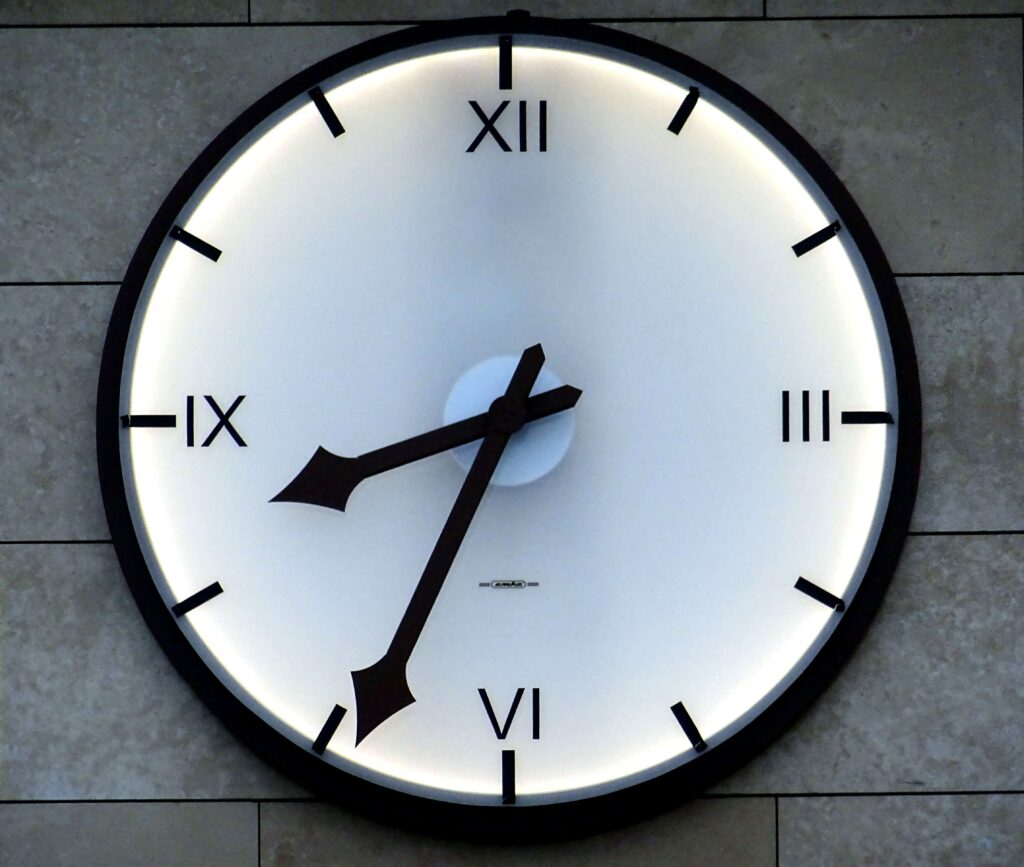
Locking the clock would keep the sun setting an hour later in the darker months. This change is designed to promote healthier, more active lifestyles, boost local economies, and reduce after-work and after-school darkness.
The Pros and Cons of Permanent Daylight Saving Time
There are different points of view regarding the question of whether or not we should keep daylight saving time permanently.
Arguments For Permanent Daylight Saving Time
-Convenience
We would no longer need to adjust clocks twice a year, and our families’ schedules would not have to change, as we would have only one time throughout the year.
-Influencing Economy and Recreation
The presence of more daylight generally means that people will buy more products and services, according to some studies.
-Reducing Problems
Supporters argue that having one clock all year round means fewer emergencies, fewer traffic accidents, and less financial losses in businesses and hospitals every spring.
Arguments Against Permanent Daylight Saving Time
-Mornings in Darkness
Under Permanent Daylight Saving Time, people’s routine will change in a way that will make them get to work when it is still dark outside.
-Dangerous Commuting
Children and teenagers will get to school when it is dark, which means that there will be more accidents involving pedestrians in the streets.
-Circadian rhythm
Sleep experts claim that standard time works better for people’s sleeping patterns because morning sunlight helps regulate the body’s natural circadian rhythm and promotes high-quality sleep.
https://commons.wikimedia.org/wiki/File:Saving_Daylight_-_An_hour_of_Light_for_an_hour_of_night_NMAH-AC0433-0001487.jpg
https://commons.wikimedia.org/wiki/Commons:Public_domain
A Brief History of Daylight Saving Time
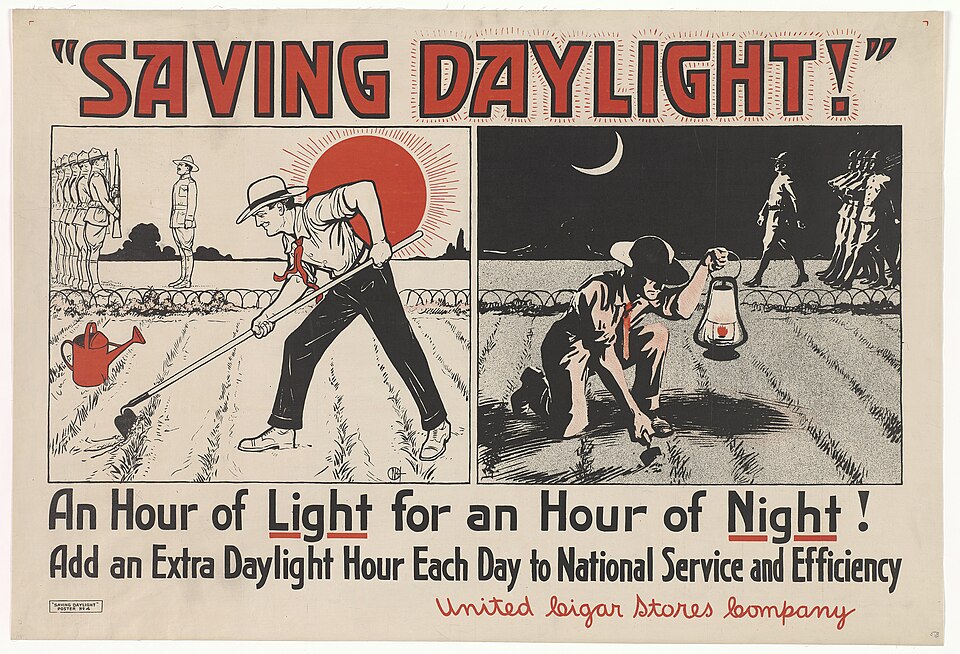
In the United States, daylight saving time has a long history. Its origin actually occurred during World War I. At the time, the United States was looking to both conserve coal and maximize daylight for wartime production, so in 1918, the Standard Time Act was adopted, which also set official time zones. However, it proved to be very unpopular, particularly with farmers. Therefore, after the war, the Standard Time Act was repealed.
The same need by the United States to conserve fuel and energy for the war effort returned in the 1940s when the nation entered World War II. Then U.S. President Franklin Roosevelt signed daylight saving time back into law. This reinstitution of the time change lasted until the Second World War concluded.
After the end of World War II, individual cities and towns made their own rules about whether or not they would observe daylight saving time as well as when it would begin and end in a calendar year. However, this caused great nationwide confusion, especially when it came to traveling. Seeing the chaos that had ensued for two decades due to these local measures, Congress passed the Uniform Time Act of 1966. This standardized the start and end time of daylight saving time for all cities and states.
There have been some changes made to the measure. The Energy Policy Act of 2005 extended the start and end dates to daylight saving time, with it beginning the second Sunday in March and ending on the first Sunday in November. Although today, 48 states and the District of Columbia practice daylight saving time, most of Arizona (except the Navajo Nation) and Hawaii remain on standard time year-round.
Previous Attempts at Permanent Daylight Saving Time
There have been some previous attempts at making daylight saving time permanent. In response to the 1973 oil embargo, President Richard Nixon made an attempt at forcing nationwide energy conservation by signing the Emergency Daylight Saving Time Energy Conservation Act. Unfortunately, it was met with a backlash as parents complained about their children standing out in the cold dark during the winter months when the sun rose late. Therefore, President Ford signed a repeal of it in 1974. In more recent times, the U.S. Senate actually did pass the Sunshine Protection Act; however, the bill ended up being stalled, never even making its way to the House of Representatives.
What Happens Next
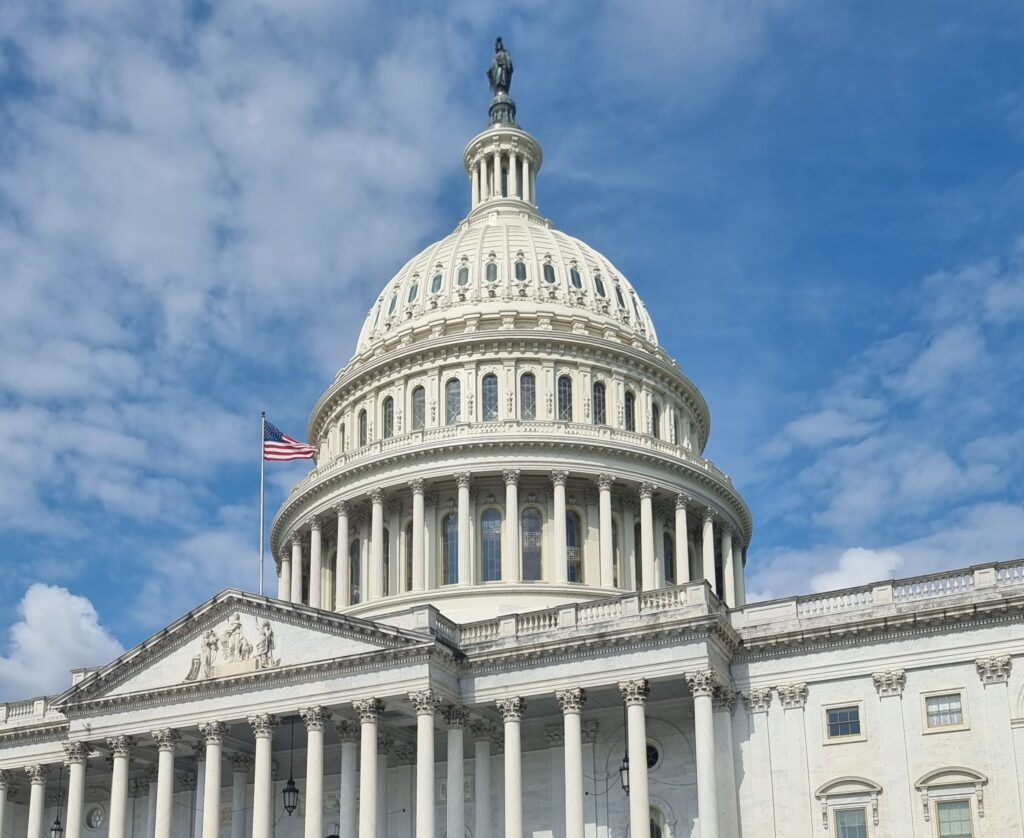
The Sunshine Protection Act that was recently passed by the House still must go through the Senate. Once it does, there will be debate concerning the act, which could cause additional provisions to be introduced. If it passes the Senate, it then goes to the President, who can either sign it or veto it. Until a signature from the President follows Senate approval, the United States will still be adhering to the practice of changing clocks twice a year.
As debate over permanent Daylight Saving Time continues, the future of the Sunshine Protection Act remains uncertain. Although the bill has cleared the House of Representatives, it must still pass the Senate and receive the President’s signature before it can become law. Until then, Americans will continue observing the current system of changing clocks twice each year. Regardless of the outcome, the legislation has renewed a long-standing national conversation about how the nation’s time system affects public health, safety, commerce, and everyday life.
Sources:
National Institute of Standards and Technology (NIST). “Daylight Saving Time Rules.”
Library of Congress, Congressional Research Service. “Daylight Saving Time (DST).”
Congress.gov. “Sunshine Protection Act of 2021 (S. 623) – Legislative History.”
Editor’s Disclaimer: This article is intended for informational and journalistic purposes only. It is based on publicly available legislative records and reporting available at the time of publication. Because the legislative process is subject to change, readers are encouraged to consult official government sources for the latest updates regarding the Sunshine Protection Act and any future changes to Daylight Saving Time. Presence News will continue to monitor developments as they occur.
