
We’re in the middle of summer in North America. This time of year means school is out, swimming pools are full, barbeques are grilling, and, of course, hot weather is everywhere. Although some parts of North America typically experience hotter temperatures than others, this summer has seen unusually intense heat expand into regions that are not normally associated with prolonged extreme temperatures. A persistent heat dome has remained over much of the eastern half of North America. This region is not typically associated with the most intense heat. The heat dome has also expanded westward into regions more accustomed to extreme summer heat, including the Southwest and California’s Central Valley.
However, this shift is expected to bring dangerously high, and in some places potentially record or near-record, temperatures.
Scope of Heat Wave
Currently, the ongoing heat wave is hovering over half the continental United States. In fact, recent heat waves have greatly affected the Midwest and Northeast. The impacts have even extended into parts of Canada. The extreme heat has also expanded into the Ohio Valley and Mid-Atlantic. However, it’s not just the Eastern portion of North America. As mentioned, the heat wave has made its way to one of the most vulnerable regions of the continent, the Southwest. But even north of this area is seeing problems. The National Weather Service has issued Extreme Heat Warnings and other heat alerts for portions of Arizona and California’s Central Valley as afternoon temperatures climb to between 111°F and 116°F. The Pacific Northwest has also experienced unusually hot conditions, with the heat extending into western Canada. Even parts of Alaska have experienced unusually warm temperatures for their geographic location. Forecasts indicate the Southeast could also experience the heat dome by the middle of the month.
Temperature Ranges
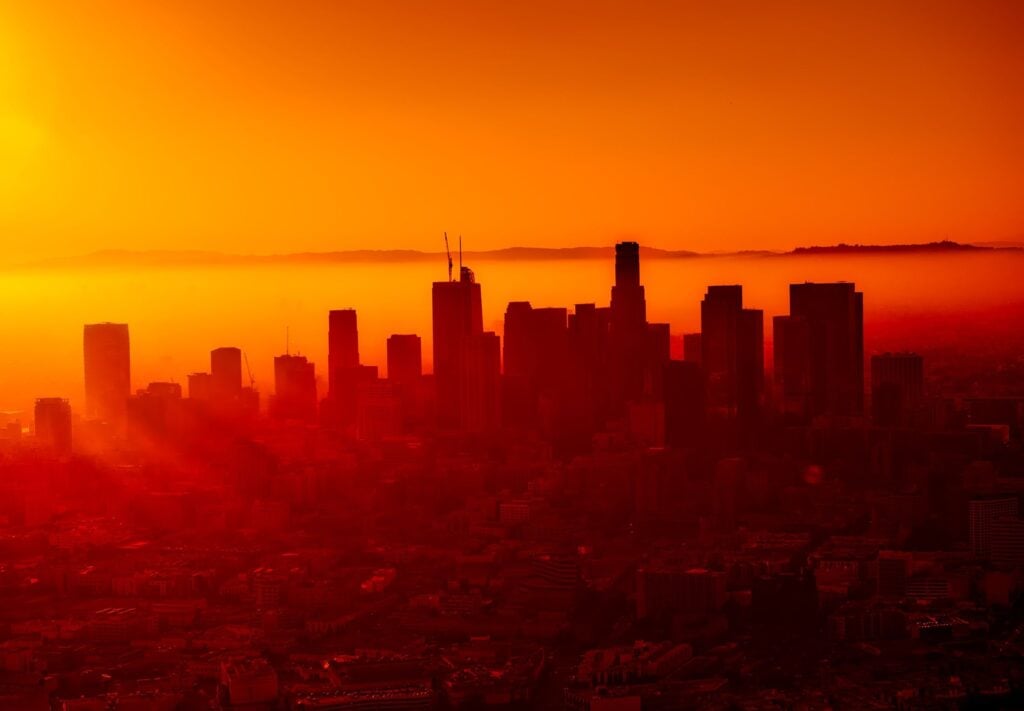
The western United States is experiencing some of the highest temperatures, with intense triple-digit temperatures ranging between 111 and 116. Meanwhile, the more humid Southeast has been seeing dangerous heat indices of anywhere between 105 and 115. Not to mention, urban centers of the Northern United States have experienced heat island effects. For example, New York City and Philadelphia saw recent nightly temperatures failing to drop below 80 degrees.
Several communities have already tied or broken notable heat records this summer, including:
Atlantic City, New Jersey: This Fourth of July, Atlantic City, New Jersey saw its all-time hottest temperature record of 106 tied.
Washington, D.C.: The capital of the United States broke its record for the hottest Fourth of July in the city’s history, with temperatures clocking in at 103.
Philadelphia, PA: The city of brotherly love recorded three consecutive days above 101 for the first time in its history.
What’s Causing This Heat?
The primary driver of this widespread heat event has been a persistent heat dome. But what exactly is a heat dome? In meteorology, a heat dome forms when a strong high-pressure system traps hot air beneath it while limiting the movement of cooler air into the region. It results in a stagnant system, which persists for several days. The system then compresses and heats the air at the surface while enabling maximum sun exposure. In areas of higher humidity, these conditions are greatly exacerbated as sweat evaporation is reduced. This, in turn, creates a high-heat index, which results in weather feeling much hotter than its respective temperature.
Implications of Heat Wave
The widespread heat wave has created numerous logistical and public health challenges across North America. In certain areas of North America, the outrageous heat collided with severe storms. This resulted in power outages for more than 1.2 million utility customers nationwide. New Jersey got hit pretty hard, with over 250,000 customers losing electricity. Meanwhile, Pennsylvania and New York also saw strains in infrastructure. In the Midwest, Michigan, which had also been experiencing higher-than-normal temperatures, saw 250,000 residents be left in the dark after the sweltering heat and storm fronts collided. The outages left many residents without air conditioning during a period of dangerous heat. In addition, there have also been other infrastructure problems, such as widespread rail speed restrictions due to buckled tracks. There have also been significant risks to agricultural production and public safety.
How Can People Stay Safe?
As the heat wave continues to affect different regions, it’s important for people in North America to take further precautions.

The National Weather Service and the CDC have recommended staying hydrated, avoiding alcohol/caffeine, and limiting strenuous outdoor activity during peak heat. They also recommend using air conditioning whenever possible and never leaving children or pets in vehicles. It’s important to look after elderly family members and neighbors. Also, it’s important to recognize the onset of heat illness before it’s too late. Symptoms include high body temperature, confusion, and/or rapid pulse.
What’s Next?
As of this writing, forecasters expect the high-pressure system driving the heat wave to continue shifting westward. This shift is expected to bring the hottest conditions into parts of the Southwest. The Climate Prediction Center also indicates that another broad period of above-normal temperatures could develop by mid-July.
Sources:
NOAA Climate Prediction Center (Homepage)
National Weather Service – Heat Safety Tips and Resources
Centers for Disease Control and Prevention (CDC) – About Heat and Your Health
Reuters – Heat wave disrupts Fourth of July events across US, strains power grids
NBC10 Philadelphia – New record broken as Philadelphia Reaches 101+ Degrees for 3 days in a row
Editor’s Disclaimer: This article is intended for informational and educational purposes only. Weather conditions and forecasts can change rapidly. Readers should monitor updates from their local weather authorities, the National Weather Service, and other official agencies for the latest forecasts, warnings, and heat safety guidance.
