
Georgia, referred to as the Peach State, is a state in the United States and has been considered to be part of the Deep South for quite some time. Georgia’s political transformation has become an important topic as the state’s voting patterns and political landscape have shifted. For almost 100 years after the end of the Civil War, Georgia voted nearly exclusively for Democratic presidential candidates, which was in line with the overall voting trend in the Deep South—known as the Solid South.
By the turn of the 21st century, however, Georgia had joined many of its southern neighbors in supporting Republican presidential candidates. Unlike neighboring states such as Alabama, South Carolina, and Tennessee—and to a lesser extent Florida—Georgia has since evolved into a competitive state with a Republican lean. Georgia’s political transformation reflects decades of demographic, economic, and cultural change that reshaped the state’s electoral landscape.
To understand the Georgia political transformation, it is necessary to examine the state’s long history of presidential voting patterns.
Deep South Georgia
For roughly 100 years after Reconstruction, Georgia remained one of the Democratic Party’s strongest presidential strongholds. Unlike several other southern states, Georgia never voted for a Republican presidential nominee during Reconstruction, even while Republicans briefly governed parts of the South. In fact, the 1964 presidential election marked the first time Georgia voted Republican at the presidential level. Between Reconstruction and 1964, only one Republican nominee managed to receive more than 40 percent of the state’s vote.
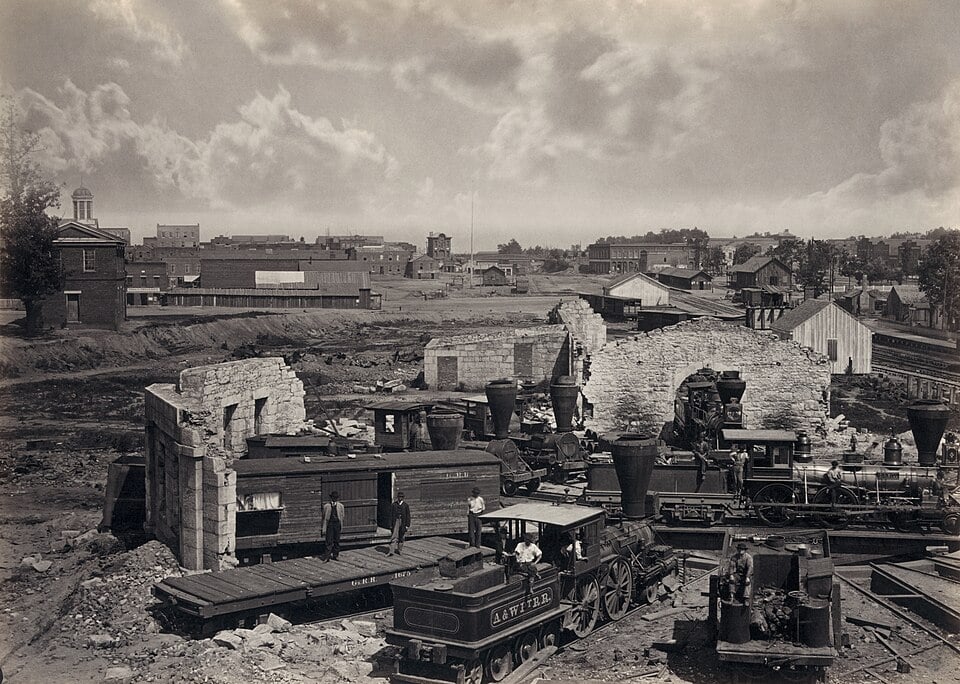
Democratic Dominance and Republican Strongholds
Even though Democrats had majority domination across all of Georgia, only a select number of counties located within the mountainous region in northern Georgia have historically differed geographically, culturally, and politically from the remainder of the state. This select group of counties also shares similar political characteristics to certain counties within other regions of the Appalachian Mountains, including eastern Tennessee, western North Carolina, and West Virginia.
Numerous inhabitants of these areas were against the idea of secession and the Civil War, as they believed the war was waged for the benefit of the rich southern aristocracy and not for working-class Americans. Therefore, they became supporters of Abraham Lincoln and Ulysses S. Grant’s Republicans after the Civil War.
These Republican-leaning counties frequently supported GOP presidential nominees even while the rest of Georgia voted overwhelmingly Democratic, although Democratic candidates occasionally carried them depending on the national political climate.
During the New Deal era, some Appalachian counties shifted toward the Democratic Party as organized labor and federal economic programs gained support. Even so, several North Georgia counties continued to stand apart politically throughout the era of Democratic dominance.
Early Republican Gains
Republican nominee William Howard Taft made modest gains in Georgia during the 1908 presidential election by appealing to several issues that resonated with southern voters. Although he lost the state comfortably, he improved Republican performance in several counties outside North Georgia.
Taft’s popularity declined during his presidency, and Democrat Woodrow Wilson—who spent much of his childhood in Georgia—easily carried the state in both 1912 and 1916. Wilson even won many of the Republican-leaning counties in North Georgia. However, dissatisfaction with Wilson’s administration after World War I would soon reshape voting patterns.
Democratic Victories During Republican National Landslides
The Republican Party won a major victory in the 1920 elections due to a nationwide rejection of many of President Wilson’s policies. While Republicans won decisively with Warren Harding across the country, Georgia’s voters selected James M. Cox by a comfortable margin, remaining solidly Democratic. Several counties in Northern Georgia returned to the Republican Party (and reflected their stronger isolationist views and long-standing tradition of voting for Republicans) during this election cycle.
In 1924, Georgia’s voters again supported a Democratic candidate, with John W. Davis winning decisively even though Calvin Coolidge won an overwhelming national victory as a Republican. While Republican strength continued to be concentrated in Northern Georgia, it was crisscrossed across the 1924 and 1928 elections with respect to voting patterns and other political issues faced by voters at their respective times of voting. The regional differences in these patterns would help define the 1928 election, especially since this election was pivotal in determining who would come out of the Party as its nominee and would ultimately determine when the Republican Party would emerge as a major political force.
The New Deal Restores Democratic Dominance
Republican gains in Georgia during the 1928 election quickly faded after the stock market crash of 1929 and the onset of the Great Depression. Democratic nominee Franklin D. Roosevelt carried Georgia overwhelmingly in all four of his presidential victories, restoring Democratic dominance across the South.
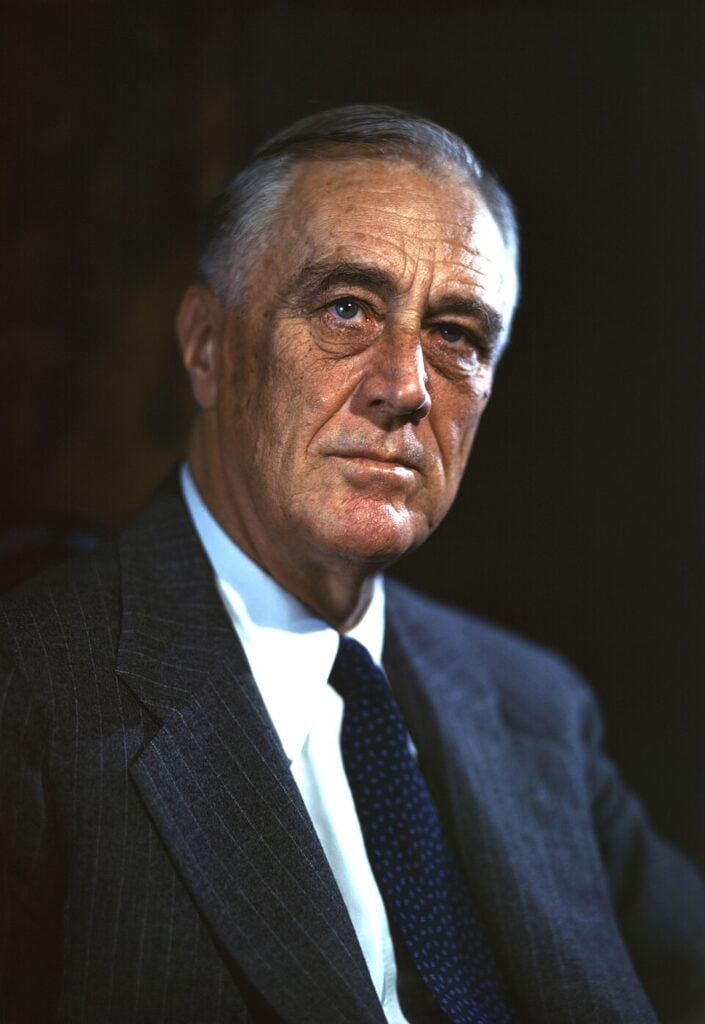
With the exception of one Republican-leaning county in North Georgia—and a second county that voted Republican in 1944—FDR carried virtually every county in the state. His popularity reinforced the Democratic Party’s hold on Georgia, but divisions between southern Democrats and the national party would soon emerge.
The Dixiecrat Revolt
Those divisions became evident in 1948 after President Harry Truman ordered the desegregation of the U.S. armed forces and embraced a stronger civil rights agenda. In response, southern Democrats nominated South Carolina Governor Strom Thurmond as the presidential candidate of the States’ Rights Democratic Party, commonly known as the Dixiecrats.
Some people thought Georgia would back Thurmond; however, political events in Georgia caused this to change. For example, Herman Talmadge, the gubernatorial candidate, did not support Thurmond because he was afraid of losing moderate white voters. Thus, when people in Georgia voted for Truman, they were one of the very few states in the Deep South that rejected the Dixiecrat ticket. The counties in Georgia closest to Thurmond’s state of birth, South Carolina, provided him with his largest support.
Georgia Remains Democratic
Despite Republican landslides nationally during the 1950s, Georgia continued to support Democratic presidential nominees. Democrat Adlai Stevenson carried the state comfortably against Republican Dwight D. Eisenhower in both 1952 and 1956.
Although Eisenhower appealed to many southern conservatives, Georgia remained loyal to the Democratic Party, illustrating that the region’s political realignment was still incomplete.
The Democratic Coalition Begins to Fracture
Religious issues again influenced southern politics in 1960 when Democrat John F. Kennedy became the first Catholic major-party presidential nominee since Al Smith. Kennedy’s faith generated skepticism among some southern Protestants, leading several neighboring states to either support Richard Nixon or back unpledged electors.
Georgia ultimately voted for Kennedy, although the contest revealed growing divisions within the state’s Democratic coalition and foreshadowed larger political changes.
Georgia Votes Republican for the First Time
The modern political transformation accelerated after President Lyndon B. Johnson signed the Civil Rights Act of 1964. Many white southern Democrats opposed the legislation, while Republican nominee Barry Goldwater argued that portions of the law exceeded the federal government’s constitutional authority.
Goldwater’s campaign carried several Deep South states, including Georgia, marking the first time the state had ever voted for a Republican presidential nominee. Unlike Mississippi or Alabama, however, Goldwater’s margin in Georgia was more modest. The rapidly growing Atlanta metropolitan area was attracting suburban voters who tended to be Republican but were generally less conservative than Goldwater’s core supporters.
Meanwhile, several traditionally Republican counties in North Georgia supported Johnson, reflecting their unique political history and continued support for some federal economic policies established during the New Deal era.
Georgia Backs George Wallace
Although Republicans had broken through at the presidential level in 1964, Democrats still dominated most state and local offices throughout the South. In 1968, Alabama Governor George Wallace ran as an independent on a segregationist platform, appealing to many conservative southern voters.
Georgia joined several Deep South states in supporting Wallace. However, many of the historically Republican counties in North Georgia instead voted for Republican Richard Nixon. These counties often differed from the rest of the state, reflecting a political tradition rooted in Civil War-era Unionism rather than the segregationist politics that influenced much of the Deep South.
Nixon, Carter, and the Final Democratic Peak
In the 1972 elections, Richard Nixon won by a landslide in Georgia, a reflection of the state’s growing conservatism. Nixon had no problem winning every county in Georgia because George McGovern’s very liberal platform didn’t resonate with many Georgians.
During 1976, the political climate changed dramatically after the Watergate scandal and Nixon’s resignation, producing former Ga. Governor Jimmy Carter to be the Democratic nominee. He ran as a Washington outsider promising to restore public confidence in government as well as to generate a “New South” image with a sense of regional pride throughout the South.

Carter successfully brought together a large coalition of both African American and White voters to win in Georgia, defeating all other candidates and making him the final Democratic presidential nominee to win all of Georgia’s counties. Additionally, he is the final Democrat to win a majority of southern states during a Presidential Election.
By 1980, however, Carter’s presidency had been overshadowed by high inflation, economic stagnation, and the Iran hostage crisis. Republican Ronald Reagan defeated Carter in a national landslide. Even so, Carter retained his home state of Georgia, becoming the last Democrat to win the state by a double-digit margin and the last Democratic nominee to carry Georgia until Bill Clinton’s victory in 1992. His 1980 performance also represented the final election in which the South, as a whole, voted more Democratic than the nation.
Republican Dominance in Georgia’s Political Transformation
Reagan’s popularity increased greatly during his first term, partly due to a recovering economy from the recession in the early 1980s. Whether or not those improvements were totally due to Reagan’s policies is still debated. However, by the time of the 1984 elections, he was very popular (having a high approval rating). He defeated former Vice President Walter Mondale in a nationwide landslide, carrying Georgia and every other southern state by comfortable margins.
Four years later, Reagan’s vice president, George H. W. Bush, continued the Republican momentum by winning Georgia decisively in 1988. By the end of the decade, the South was becoming increasingly Republican at both the presidential and state levels, although Georgia’s political evolution was not yet complete.
Bill Clinton Slows the Republican Trend
The Republican shift temporarily slowed in 1992 when Arkansas Governor Bill Clinton won the Democratic nomination. Like Jimmy Carter, Clinton was a southern governor who embraced a more moderate, fiscally conservative message while appealing to independent voters. His campaign benefited from a slowing economy, divisions within the Republican Party, and the independent candidacy of Ross Perot.
Clinton narrowly carried Georgia by winning support from many working-class white voters who had previously backed Carter. Four years later, he narrowly lost the state to Republican Bob Dole. Those elections marked the last time many of Georgia’s rural and working-class counties either voted Democratic or remained highly competitive. At the same time, suburban voting patterns were beginning to change, setting the stage for future political shifts.
Republican Strength Returns
Republican dominance returned in 2000 as Texas Governor George W. Bush carried Georgia comfortably over Vice President Al Gore. Bush repeated that performance in 2004 against Senator John Kerry, winning the state by another double-digit margin.
While Bush had a runaway victory in the general election, the outcome illustrated the growing changes in demographics. Gore and Kerry (to a lesser extent) will likely be the last Democratic nominees competitive in many traditional Democratic working-class counties. As a result, Bush will also be the final Republican presidential nominee to receive support from several urban/suburban county areas that went on to support the Democratic Party in future elections.
His 2004 victory also remains the last time a Republican carried Georgia by double digits.
Georgia Political Transformation Accelerates
The Georgia political transformation accelerated after George W. Bush left office and following the 2008 financial crisis. About the same time as that was happening, Democrat Barack Obama became president and also increased the number of votes within suburban (Atlanta) communities throughout America. The changes in Georgia’s electorate were due to changes in population growth rates, increasing racial and ethnic diversity, and movement from within and outside the country.
Republican John McCain carried Georgia by about six percentage points in 2008, while Mitt Romney expanded the Republican margin to roughly eight points in 2012. Even so, Democratic gains in the Atlanta suburbs continued, while many rural counties became increasingly Republican.
A Republican-Leaning Swing State
The close margins in 2008 and 2012 signaled Georgia’s emergence as one of the nation’s most competitive states. Donald Trump carried Georgia by roughly five percentage points in 2016, benefiting from strong Republican turnout and the unpopularity of Democratic nominee Hillary Clinton among some voters.
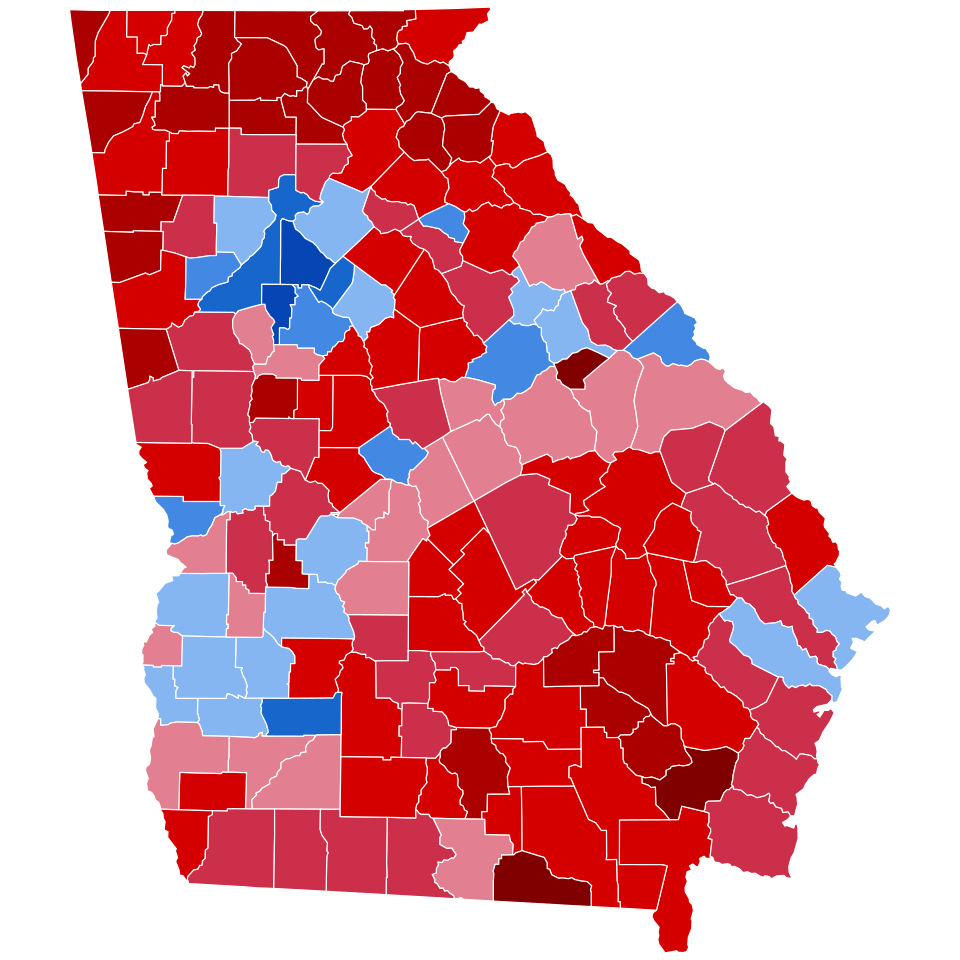
Four years later, Georgia became one of the closest contests in the country. Amid record turnout during the COVID-19 pandemic, Democrat Joe Biden narrowly carried the state, becoming the first Democratic presidential nominee to win Georgia since Bill Clinton in 1992. Biden’s win was aided by high levels of support from African Americans, continued gains for Democrats in the Atlanta metro area, and an expanding population base within these same metro areas, while the Republican Party made gains throughout rural Georgia.
The Georgia political transformation remained evident in 2024 as Trump narrowly regained Georgia, highlighting just how evenly divided the state’s electorate has become. The closely contested elections of 2020 and 2024 illustrate the continuing Georgia’s political transformation, as the state has evolved into one of the nation’s most competitive presidential battlegreounds. Georgia remains one of the most-coveted battleground states in the U.S. presidential elections, unlike its southern neighbor, Florida, which has trended more Republican over recent election cycles.
Sources:
New Georgia Encyclopedia – “Government & Politics”
Digital Library of Georgia – “Presidential Elections: 1964”
Ballotpedia – “Presidential voting trends in Georgia”
The American Presidency Project – “1964”
Encyclopædia Britannica – “Georgia (U.S. state)”
The American Presidency Project – “2024 Election Results”
Encyclopædia Britannica – “Solid South”
National Archives – “The Electoral College”
Encyclopædia Britannica – “Reconstruction”
Editor’s Disclaimer: This article is intended for informational and historical purposes only. It provides an overview of Georgia’s political evolution based on publicly available historical records, official election results, and reputable reference sources. The article does not endorse or oppose any political party, candidate, or ideology. Readers are encouraged to consult the cited sources for additional context and to explore the subject in greater depth.
